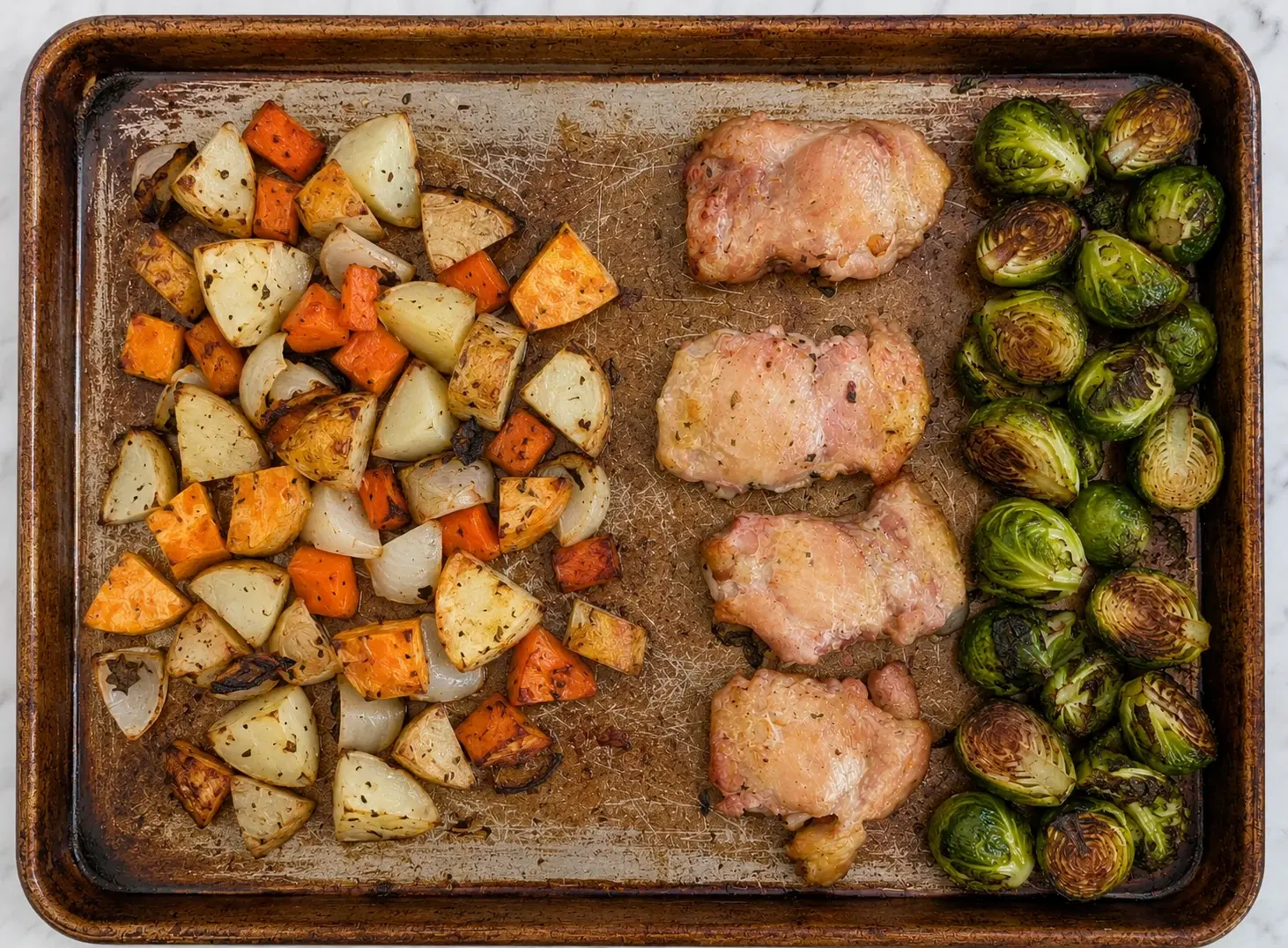
Sheet-pan chicken with sweet potatoes and Brussels sprouts for an easy 40-minute dinner.
Prep
15 mins
Cook
25 mins
Total
40 mins
Calories
249 kcal
Protein
33.6 g
Carbohydrates
23.6 g
Serves
4 servings
Fat
3.6 g
A high-heat roast turns lean chicken, sweet potatoes, and Brussels sprouts into a complete tray: browned edges, tender centers, and balanced macro-nutrients without extra pans. The method focuses on even cutting, deliberate spacing, and mid-roast agitation so everything finishes together and tastes more complex than the short ingredient list suggests.
Sheet-Pan Chicken with Sweet Potatoes and Brussels Sprouts scores as a strong everyday dinner because it combines lean protein, vegetables, and fiber-rich carbs in a simple one-pan format.
Based on the recipe as written and estimated nutrition per serving. This score offers comparison context, not individualized health advice.
Heat strategy: 425 F creates fast surface dehydration so cut faces brown before interiors overcook. Tossing at the midpoint re-exposes new surfaces to hot air for more even color and texture.
Size matching: Cubing chicken and sweet potatoes to similar thickness syncs doneness windows, preventing firm potatoes or dry chicken.
Moisture management: Spacing in a single layer is the difference between roasted and steamed. If pieces touch, evaporated water condenses and stalls browning.
Score context: This tray aligns with a strong everyday pattern—lean protein plus fiber-dense vegetables and measured oil. Keeping the pan vegetable-forward and salt measured preserves its positive balance.
Large rimmed half-sheet pan (18×13 in)
Parchment or foil (optional, for easier cleanup)
Large mixing bowl for tossing
Tongs or a wide spatula
Instant-read thermometer
Ingredient notes
Brussels sprouts add fiber and vitamin C.
Preheat and prep the pan
Heat the oven to 425 F. Line a large rimmed sheet pan if you want easier cleanup, then leave enough room for the chicken and vegetables to spread in a single layer.
Cut the chicken and vegetables evenly
Cut the chicken and sweet potatoes into similar-size pieces so they finish at the same time. Halve large Brussels sprouts so the centers cook through while the edges brown.
Season the sheet pan
Add the chicken, sweet potatoes, Brussels sprouts, oil, and seasonings to the pan or a large bowl. Toss until everything is lightly coated.
Arrange in a single layer
Spread everything across the pan with space between pieces. Use a second pan if the ingredients look crowded, because crowded food steams instead of browning.
Roast and toss halfway
Roast for 12 minutes, then toss the vegetables and turn the chicken pieces. Return the pan to the oven for 10 to 13 minutes more, until the vegetables are tender and browned at the edges.
Check doneness and serve
Check that the thickest chicken pieces reach 165 F. Rest for 3 to 5 minutes, then serve as a one-pan dinner or portion into meal-prep containers.
Per-serving details
Nutrition Facts
4 servings per container
Amount per serving
Calories
249
Protein 33.6 g
Per batch: 134.6 g
Total Fat 3.6 g
Per batch: 14.3 g
5%
Saturated Fat 1.4 g
Per batch: 5.7 g
7%
Total Carbohydrate 23.6 g
Per batch: 94.3 g
9%
Fiber 12.5 g
Per batch: 50 g
45%
Cholesterol 82 mg
Per batch: 330 mg
27%
Sodium 374 mg
Per batch: 1497 mg
16%
Vitamin A 242 mcg
Per batch: 969 mcg
27%
Vitamin C 185 mg
Per batch: 739 mg
206%
Vitamin E 0.2 mg
Per batch: 0.8 mg
1%
Calcium 148 mg
Per batch: 593 mg
11%
Iron 2.7 mg
Per batch: 10.7 mg
15%
Magnesium 146 mg
Per batch: 585 mg
35%
Potassium 1589 mg
Per batch: 6358 mg
34%
* The % Daily Value tells you how much a nutrient in a serving of food contributes to a daily diet. 2,000 calories a day is used for general nutrition advice.
Lean protein with complex carbs.
Nutrition information is automatically calculated, so should only be used as an approximation.
Optional recipe science
Chicken breast: Primary protein matrix that firms around 150–165 F as myofibrillar proteins denature; provides satiety with minimal saturated fat, and browns where surface moisture is controlled.
Sweet potato: Starchy root adds viscosity-building gelatinized starch and natural sweetness; fiber and carotenoids support steadier energy and color development during roasting.
Brussels sprouts: Cruciferous leaves supply fiber, sulfur compounds, and abundant surface area for Maillard browning; halving exposes cut faces that caramelize while cores tenderize.
Olive oil: Monounsaturated fat improves heat conduction and promotes even browning; helps absorb fat-soluble compounds and carries spice volatiles across the tray.
Garlic powder: Concentrated allium flavors distribute evenly without moisture; contributes antioxidant compounds and savory depth without added fat.
Smoked paprika: Supplies smoke aromatics and carotenoid pigments that intensify color; adds perceived savoriness so less sodium is needed.
Sea salt: Enhances flavor and early seasoning aids moisture retention by light protein solubilization; keep measured to maintain a heart-friendly profile.
Black pepper: Adds piperine-driven pungency and a volatile lift; small amounts sharpen overall flavor without heaviness.
Protein doneness: Chicken is safe and juicy at 165 F in the thickest cube; pulling promptly avoids additional carryover that can firm the fibers excessively.
Starch behavior: Sweet potato cells gelatinize as they heat, moving from crisp to tender. Smaller cubes finish within the same window as the chicken.
Crucifer crunch-to-brown: Brussels sprouts halve well because exposed cut faces brown quickly while residual moisture softens the cores.
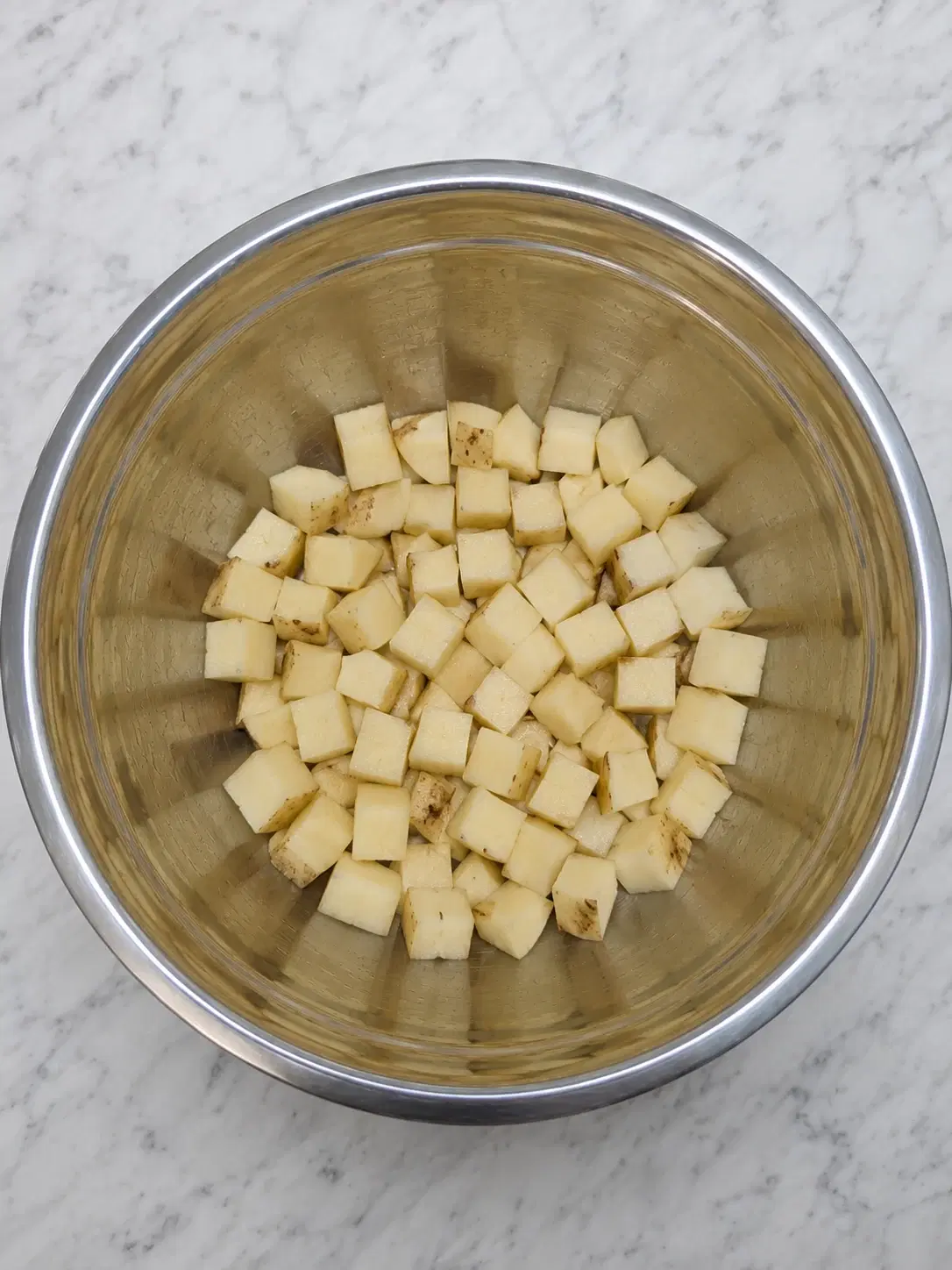
Oil efficiency: About 1 1/2 tablespoons is enough to coat 5–6 cups of ingredients thinly, maximizing contact and browning without tipping the tray greasy. I use Misto to help reduce teh amount of oil on the potatos
Increase plant diversity: Add red onion, cauliflower, or broccoli for more fiber variety and volume without complicating the method.
Keep sodium measured: Lean harder on acids (lemon), mustard, smoked paprika, and herbs to boost perceived saltiness without adding more salt.
Legume add-on: Stir in chickpeas for the final 10 minutes to lift fiber and yield; the late add prevents drying.
Texture insurance: If your oven runs cool, preheat the pan for 5 minutes before loading to jump-start browning.
Roast hot, cut evenly, and spread widely. Those three variables control moisture, browning, and simultaneous doneness more than any specific spice blend.
Keep building the science thread with ingredient guides, nutrition-focused recipes, and the site scoring notes as they expand.
Optional adjustments
Explore lower-sodium, higher-fiber, or more plant-forward variations.
Use these changes to make the tray even more plant-forward and supportive without losing the weeknight simplicity.
Choose a change to preview how the tray improves with more plants, more fiber, or a lighter seasoning approach.
Start with one or two upgrades to preview how the recipe improves.
Keep this recipe handy
Tips, variations, storage advice, and quick fixes—all in one place.
Cool completely, then refrigerate in airtight containers for up to 4 days.
Reheat at 400 F on a sheet pan or in a hot skillet to restore browned edges.
For meal prep, pack an acid component (lemon, vinaigrette) separately and add after reheating to keep flavors bright.
Maple Mustard Sheet Pan Chicken
Whisk 1 tablespoon Dijon mustard with 1 teaspoon maple syrup and toss it with the oil and spices.
Finish with lemon juice to keep the sweet-savory flavor balanced.
Spicy Paprika Chicken Tray
Add chili powder or crushed red pepper with the smoked paprika.
Serve with Greek yogurt or avocado to cool the heat.
Higher-Fiber Meal Prep Version
Add chickpeas or black beans during the last 10 minutes of roasting.
Pack with greens or quinoa for a more filling lunch container.
Citrus-Herb Finish
Toss hot tray with lemon zest, parsley, and a small splash of red wine vinegar right before serving.
This boosts aroma and perceived saltiness without more sodium.
If your oven has strong rear heat, rotate the pan front-to-back at the midpoint to prevent uneven browning.
Use the bowl-toss method (not pan-toss) for more uniform oil and spice distribution; it reduces dry spots that resist browning.
Aim for 3/4-inch sweet potato cubes; smaller cubes over-soften before chicken finishes.
Veggies too soft? Spread the ingredients out more or use a second sheet pan.
Chicken dry? Check it earlier and pull the pan as soon as the thickest pieces reach 165 F.
Sweet potatoes still firm? Cut them slightly smaller next time or give them a 5-minute head start before adding chicken.
Not browning? Preheat the empty pan, verify oven temperature with an oven thermometer, and avoid silicone mats which slow browning.
How do I keep sheet-pan chicken and vegetables from cooking unevenly?
Cut chicken and vegetables into similar-size pieces, keep everything in a single layer, and toss halfway through roasting.
What temperature should chicken reach on a sheet pan?
Chicken should reach an internal temperature of 165 F in the thickest piece before serving.
Can I use chicken thighs instead of chicken breast?
Yes. Boneless chicken thighs work well, but they may need a few extra minutes depending on size. Keep the same 165 F internal temperature target.
Can I meal prep this recipe ahead?
Yes. Roast fully, cool, and store portions in airtight containers for up to 4 days. Reheat in the oven or skillet for the best texture.
Why are my Brussels sprouts soft instead of browned?
The pan is probably crowded or the sprouts are too wet. Dry them well, spread everything out, and use two pans if needed so the vegetables roast instead of steam.
How much salt is enough for this tray?
Start with the measured 0.5 teaspoon for the full tray. Finish with lemon juice or herbs to boost perceived saltiness before adding more.
Some recipes include affiliate links to products we genuinely use and recommend. If you purchase through these links, we may earn a small commission at no extra cost to you, which helps keep our recipes free to access.
See what other cooks think and share your own tips.
Want to leave a review?
Sign in with your account to rate this recipe and share your notes.
Loading reviews…