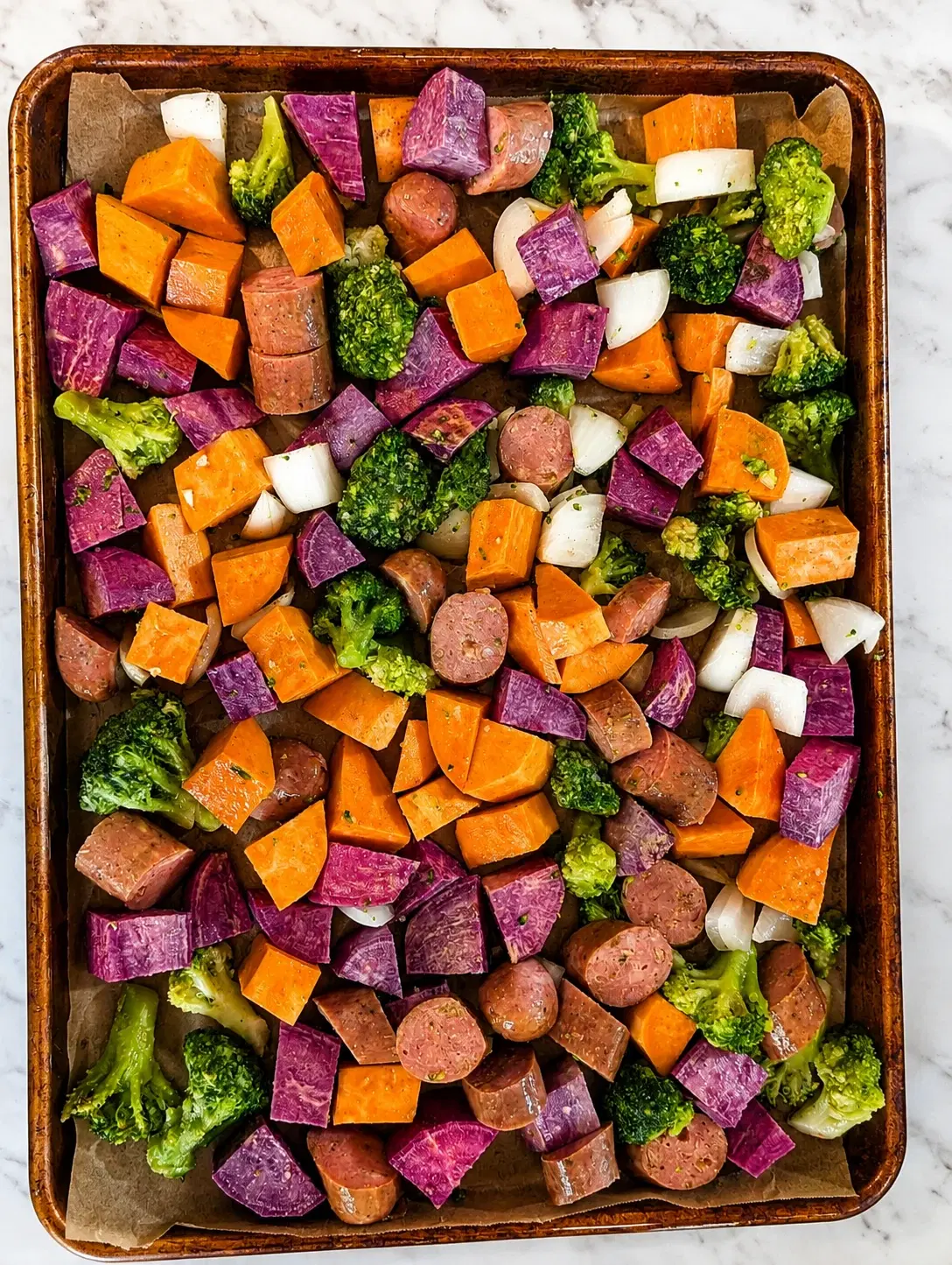
This sweet potato sausage sheet pan dinner is an easy weeknight meal with roasted vegetables, smoky sausage, and minimal cleanup.
Prep
10 mins
Cook
30 mins
Total
40 mins
Calories
280 kcal
Protein
24.6 g
Carbohydrates
38.8 g
Serves
4 servings
Fat
4.5 g
Keep this recipe handy
Tips, variations, storage advice, and quick fixes—all in one place.
Cool quickly: Spread leftovers to vent steam for 10 minutes before packing. This preserves texture.
Refrigerate up to 4 days in airtight containers.
Reheat: 375 F oven or toaster oven for 8–10 minutes restores crisp edges; microwave is fine for speed but softens textures.
Freeze up to 1 month. Expect broccoli to soften after thawing; reheat on a hot pan to drive off moisture.
Meal‑prep note: Chilling and reheating can increase resistant starch in sweet potatoes, which may make the carbs feel steadier for some people.
Make it spicier
Add crushed red pepper before roasting.
Make it lower sodium
Choose low-sodium sausage and salt lightly.
Mediterranean lemon–herb
Toss with oregano and smoked paprika before roasting; finish with lemon juice, parsley, and a drizzle of extra virgin olive oil.
Maple–mustard glaze
Whisk 1 tablespoon Dijon with 1 teaspoon maple syrup and 1 teaspoon apple cider vinegar; brush on during the last 5 minutes.
Cajun smoky
Season with Cajun spice blend and add sliced bell peppers with the broccoli.
Bean‑boosted
Add 1 can drained chickpeas on the second half of roasting for extra fiber and a crisp exterior.
When I want maximum browning without sticking, I preheat the empty sheet pan for 5 minutes, then add the oiled ingredients—contact sizzle gives you a head start.
If your broccoli runs small and cooks too fast, keep the stalks a bit thicker or add them 5 minutes after everything else.
Soggy instead of crisp: The pan is crowded. Split to two pans or use a larger half sheet and avoid overlapping pieces.
Uneven doneness: Your cuts aren’t uniform. Trim the largest sweet‑potato pieces and aim for 3/4‑inch cubes next time.
Sausage dries out: Slices are too thin or you roasted too long. Use 1/2‑inch slices and begin checking at the low end of the time range.
Broccoli scorches: Your florets are small and your pan runs hot. Add broccoli in the last 10–12 minutes or toss it with a touch more oil.
Not enough browning: Skip parchment, pat vegetables dry before seasoning, and make sure the oven is fully preheated.
Score: 0/10 · 10 left
Question 1
What does the recipe's meal-balance label "Stronger meal balance" most directly communicate?
Question 2
Which ingredient listed is a primary source of protein in this recipe?
Question 3
How does the recipeScore metric labeled "metabolic" (value 80) relate to the dish?
Question 4
Which ingredient provides dietary fiber and plant-based nutrients that contribute to the recipe's whole-food and ingredient patterns?
Question 5
The recipe notes that 'processed meat adds tradeoffs to the whole-food and ingredient patterns.' Which ingredient is considered processed meat here?
Question 6
Which form is the olive oil listed as in the ingredients, and what general role does it play?
Question 7
Which seasoning listed is presented as a measured dry spice that contributes flavor but also may have mild health-supporting compounds?
Question 8
The recipeScore includes an "inflammation" metric with value 86. Which ingredient grouping in the recipe most directly supports an anti-inflammatory profile?
Question 9
One quickImprovement suggests trading processed meat for alternatives. Which of the following is listed as a suggested swap?
Question 10
Which ingredient form is explicitly given for the vegetables in the ingredient list?
Some recipes include affiliate links to products we genuinely use and recommend. If you purchase through these links, we may earn a small commission at no extra cost to you, which helps keep our recipes free to access.
See what other cooks think and share your own tips.
Want to leave a review?
Sign in with your account to rate this recipe and share your notes.
Loading reviews…
Optional adjustments
Explore lower-sodium, higher-fiber, or more plant-forward variations.
Toggle possible adjustments and preview how they shift the recipe's meal balance.
This is the kind of feedback users would see after making a few improvements.
Start with one or two upgrades to preview how the recipe improves.
One hot pan, high-heat roasting, and matched cut sizes make this a dependable 40‑minute dinner. Small sweet‑potato cubes and a mid‑roast toss sync cook times with broccoli, onion, and sliced sausage. You get browned edges, tender centers, and a protein–fiber balance that keeps the meal satisfying without extra steps.
Heat: 425 F for rapid surface drying and browning.
Geometry: 3/4-inch sweet‑potato cubes increase surface area so starches gelatinize and edges caramelize within the 30-minute window.
Moisture management: A single layer and a mid‑roast toss vent steam and expose new surfaces to hot air for even color.
Flavor carry: A measured film of olive oil distributes fat‑soluble flavors and helps crisping without greasiness.
This build tends to perform well across meal balance, energy support, ingredient balance, and whole-food pattern because it combines colorful plants, protein, and measured fat. The main watchout is sodium and the use of processed meat; choosing a leaner, lower‑sodium sausage keeps the strengths intact.
Ingredients
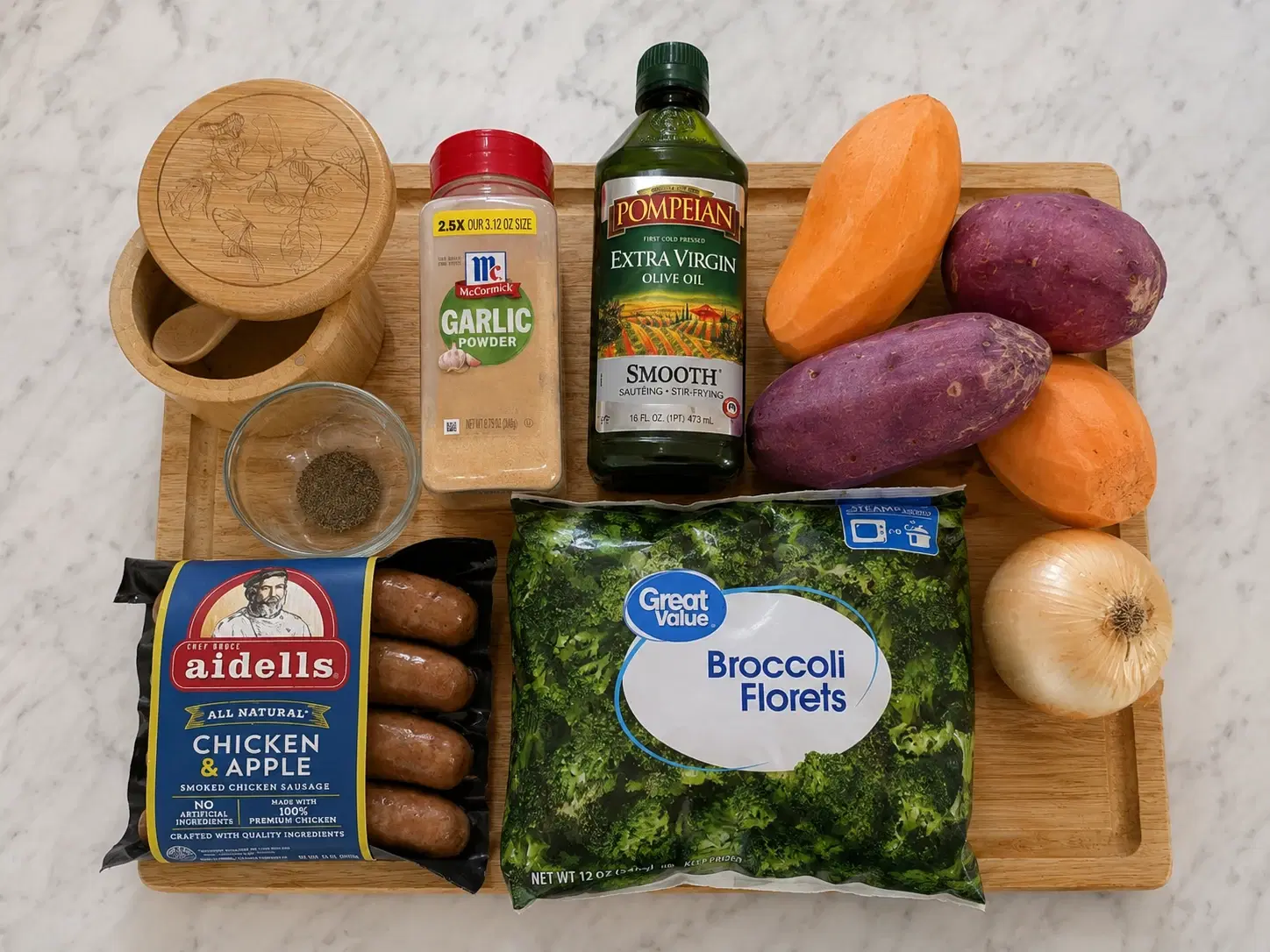
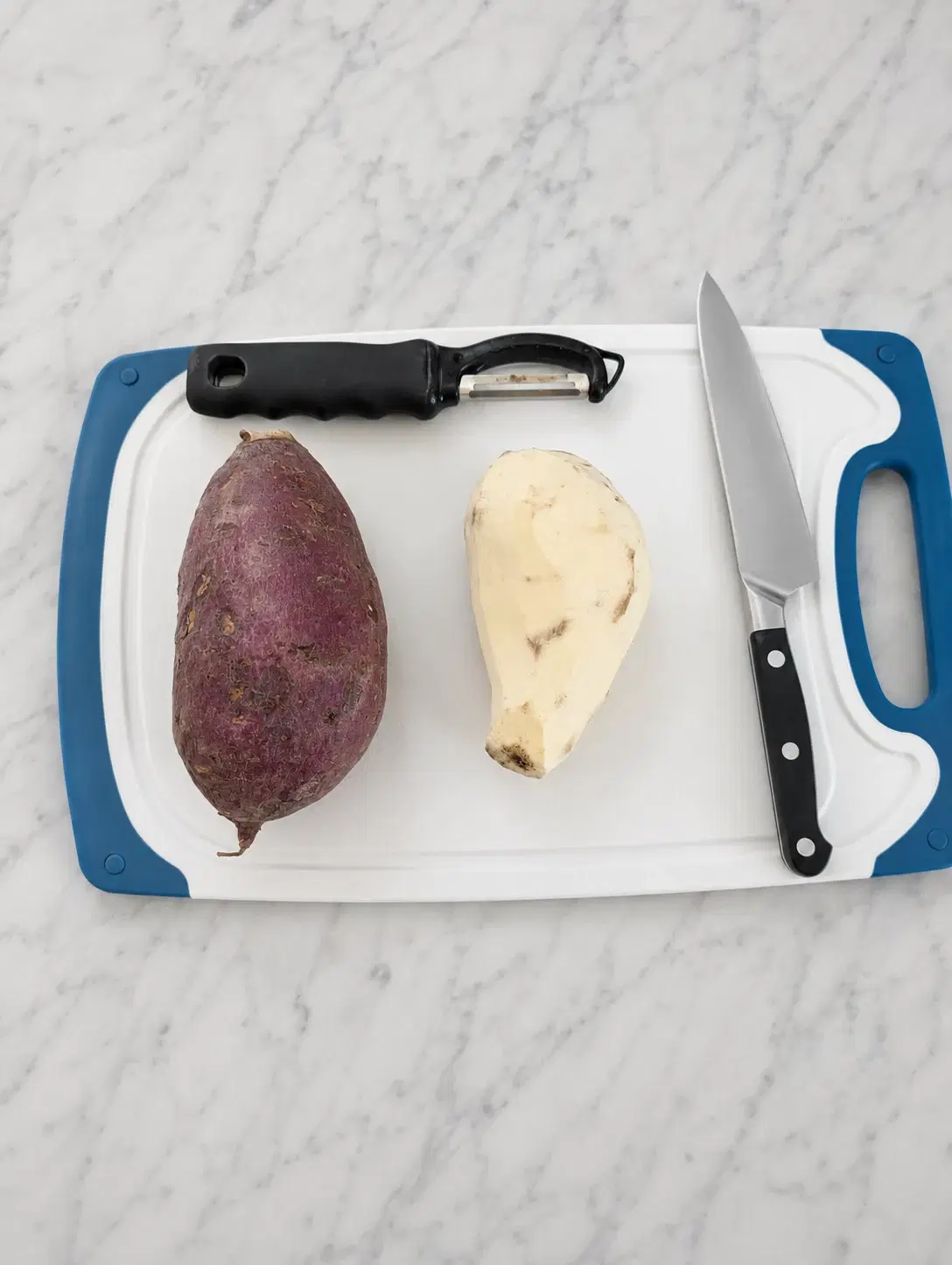
Cut up Sweet Potato's and Preheat your oven to 425 F
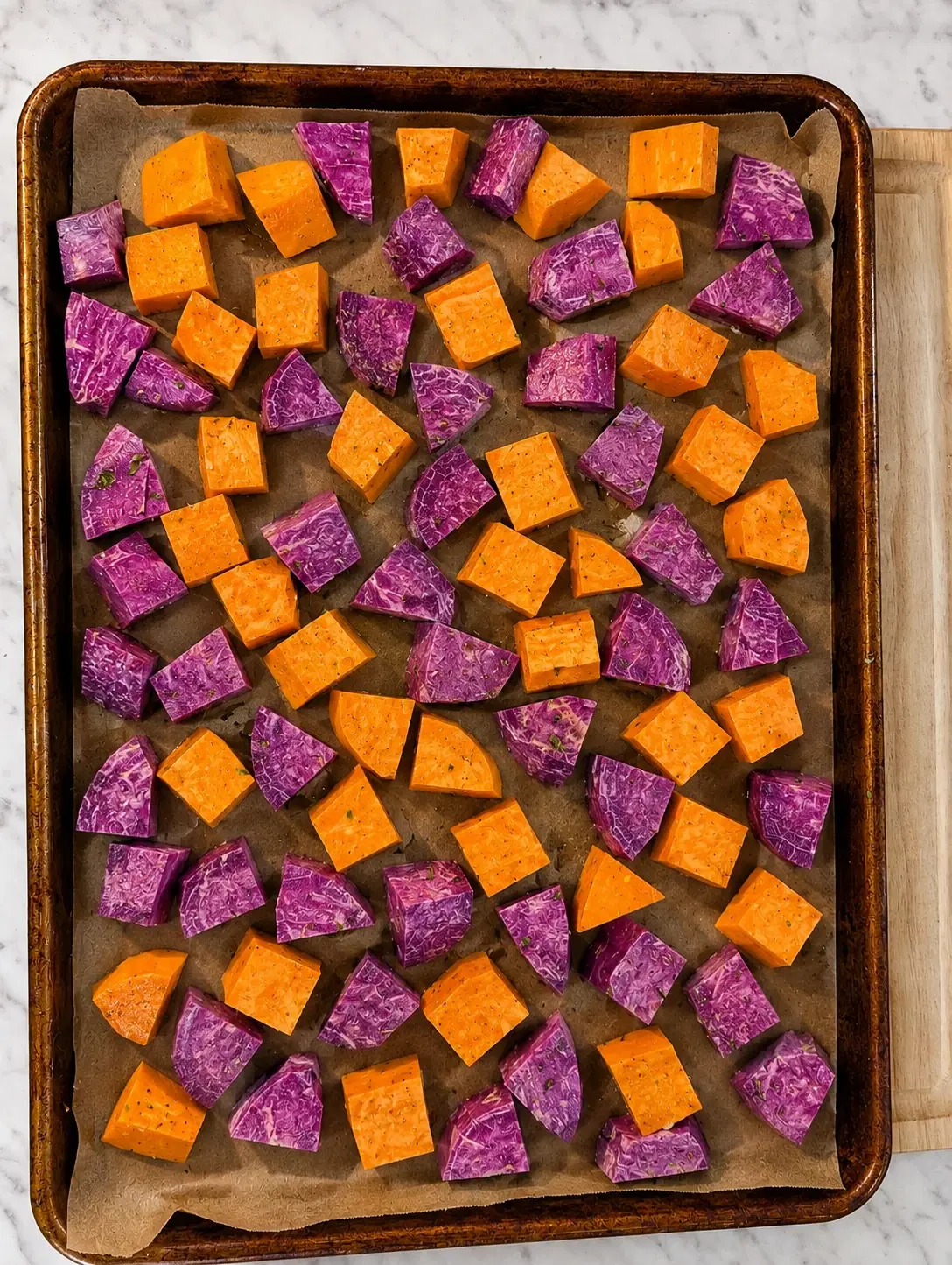
line a large sheet pan with parchment, and toss the sweet potatoes with olive oil, garlic powder, salt, and pepper. Spread them out so they are not crowded.
Roast for 15 minutes to give the potatoes a head start.
Add the sausage, broccoli, and red onion, toss everything directly on the pan, and return to the oven for 12 to 15 more minutes until the vegetables are tender and the sausage is browned around the edges.
If you want deeper color, broil for 1 to 2 minutes at the end and watch closely. Finish with lemon juice or a sprinkle of fresh herbs for a brighter flavor.
Large rimmed sheet pan (half sheet, 18×13 inches preferred)
Parchment paper or silicone baking mat (optional; parchment = easier cleanup, bare pan = more contact browning)
Large mixing bowl
Chef’s knife and cutting board
Spatula or metal turner for mid‑roast toss
Measuring spoons
Instant‑read thermometer (optional, for raw sausage variants)
Ingredient notes
Pre-cooked sausage keeps this sheet pan dinner quick and practical.
Prep
Heat oven to 425 F. Line a sheet pan and prep all ingredients.
Season
Toss everything with oil and seasonings until well coated.
Roast first round
Spread in a single layer and roast for 20 minutes.
Toss and finish
Toss and roast 8 to 10 more minutes until sweet potatoes are tender and edges brown.
Serve
Serve immediately or portion into meal prep containers.
Per-serving details
Nutrition Facts
4 servings per container
Amount per serving
Calories
280
Protein 24.6 g
Per batch: 98.5 g
Total Fat 4.5 g
Per batch: 18.1 g
6%
Saturated Fat 1.9 g
Per batch: 7.4 g
10%
Total Carbohydrate 38.8 g
Per batch: 155.1 g
14%
Fiber 7 g
Per batch: 27.8 g
25%
Cholesterol 31 mg
Per batch: 122 mg
10%
Sodium 475 mg
Per batch: 1902 mg
21%
Vitamin A 517 mcg
Per batch: 2067 mcg
57%
Vitamin C 162 mg
Per batch: 650 mg
180%
Vitamin E 2.7 mg
Per batch: 10.9 mg
18%
Calcium 109 mg
Per batch: 435 mg
8%
Iron 2.9 mg
Per batch: 11.8 mg
16%
Magnesium 93 mg
Per batch: 372 mg
22%
Potassium 1719 mg
Per batch: 6878 mg
37%
* The % Daily Value tells you how much a nutrient in a serving of food contributes to a daily diet. 2,000 calories a day is used for general nutrition advice.
Nutrition is an estimate and varies by ingredient brands and exact quantities.
Nutrition information is automatically calculated, so should only be used as an approximation.
Optional recipe science
Turkey or chicken sausage: Protein anchor that boosts satiety and browning via Maillard reactions; its rendered fat lightly bastes vegetables and adds smoky/savory notes. Watch sodium and processing—choose lean, lower‑sodium options and slice about 1/2 inch so it browns without drying.
Sweet potatoes: Starchy, fiber‑rich cubes that caramelize at the surface while interiors gelatinize to creamy. Carotenoids benefit from a little oil for absorption. Smaller, ~3/4‑inch pieces align their cook time with the rest of the tray.
Broccoli florets: High-moisture crucifer that both steams and browns; cut medium florets so they tenderize in the same window. Placing some cut‑sides down increases contact browning while keeping stems crisp‑tender.
Red onion: Allium sugars concentrate and brown, adding sweetness and aromatic depth; provides prebiotic fibers. Sliced wedges hold texture better than thin slivers.
Olive oil: Thin, measured film improves heat transfer, prevents sticking, and carries fat‑soluble flavors. Mostly monounsaturated fats; the small amount used supports crisping without heaviness.
Garlic powder: Evenly distributes allium flavor that’s heat-stable and won’t scorch as easily as fresh minced garlic on a hot sheet pan.
Kosher salt: Draws surface moisture, enhances sweetness, and helps browning by nudging down water activity. Go light initially; the sausage adds salt.
Black pepper: Piperine and volatile oils add gentle heat and aroma; fine grind during roasting integrates flavor, a coarse grind at the end boosts aroma.
Vegetable‑forward tray bake with solid protein and fiber; watch processed meat and sodium.
Based on the recipe as written and estimated nutrition per serving. This score offers comparison context, not individualized health advice.