Prep
10 mins
Cook
25 to 30 mins
Total
35 to 40 mins
Calories
262 kcal
Protein
3.6 g
Carbohydrates
45.8 g
Serves
4 servings
Fat
7.6 g
Keep this recipe handy
Tips, variations, storage advice, and quick fixes—all in one place.
Cool completely, then refrigerate in a shallow, airtight container for up to 4 days.
Re-crisp in a 400°F to 425°F oven for 8 to 12 minutes; use a hot pan and leave space between pieces.
Air fryer: 375°F for 5 to 8 minutes, shaking once.
Freeze on a sheet in a single layer, then bag for up to 2 months. Reheat from frozen at 425°F, 12 to 18 minutes.
Tip: Chill in a shallow layer before packing to avoid trapped steam. Chilling and reheating can modestly change starch structure, which some find improves texture.
Maple Cinnamon
Drizzle 1 teaspoon maple syrup and sprinkle with cinnamon before serving.
Garlic Herb
Add rosemary and a pinch of garlic powder before roasting.
Savory Bowl Style
Season with paprika, cumin, and chili powder for a savory bowl base.
Chili–Lime
Toss with chili powder before roasting; finish with lime juice and zest.
Harissa
Coat with a thin smear of harissa paste and olive oil; roast as directed.
Miso–Sesame
Whisk 1 teaspoon white miso with 1 teaspoon sesame oil and 1 teaspoon water; toss with hot potatoes and finish with sesame seeds.
Soggy, pale cubes: The pan was crowded or not fully preheated. Split onto two pans or preheat the pan.
Sticking to the pan: Not enough oil or you tried to flip too early. Wait until the first side releases easily and use a thin metal spatula.
Uneven browning: Cubes varied in size or the oven has hot spots. Standardize at 3/4-inch and rotate the pan halfway.
Burnt edges, hard centers: Cubes were too small or oven too hot. Cut to 3/4-inch and verify oven temperature with a thermometer.
Weak flavor: Add a bright finisher (lemon, vinegar) or fresh herbs after roasting to amplify perception without more salt.
Can I make Crispy Roasted Sweet Potatoes ahead of time?
Yes. Roast up to 3 days ahead, cool completely, and refrigerate. Re-crisp on a hot sheet pan at 400°F to 425°F for 8 to 12 minutes just before serving.
Should I peel the sweet potatoes?
Peeling is optional. The skin adds texture and fiber. If keeping the skin, scrub well and trim any blemishes.
Is convection better for this recipe?
Yes, if available. Convection speeds drying and browning. Keep the temperature the same and start checking 5 minutes early.
Can I use frozen sweet potato cubes?
They’ll brown less readily because of surface moisture. Roast from frozen on a preheated pan at 425°F and allow extra time, or thaw and pat very dry first.
How do I get the best browning?
Use a preheated heavy sheet pan, keep cubes in a single layer with space, and flip once after initial color develops.
How should I store leftover Crispy Roasted Sweet Potatoes?
Store in an airtight container in the refrigerator for up to 4 days. Reheat in a hot oven or air fryer for the best texture.
Score: 0/7 · 7 left
Question 1
In the recipeScore metrics, the "longevity" label reads "Whole-food pattern" with value 84. What does that suggest?
Question 2
The "metabolic" metric is labeled "Energy support" and scored 68. What does a score like this imply about the dish?
Question 3
The ingredients list begins with "## Fiber / plants" and includes sweet potatoes. Which of the following is an accurate statement about sweet potatoes' contribution to the body?
Question 4
The recipe lists 2 tablespoons extra virgin olive oil under "Fats." What is a reasonable way to describe how this ingredient supports the body?
Question 5
Salt (0.5 teaspoon) appears under "Flavor / spices." What is its role in the body?
Question 6
Black pepper and smoked paprika are included as spices. What is a safe, general fact about spices like these in the diet?
Question 7
The quickImprovements suggest adding beans, lentils, edamame, or seeds. Why would adding these be recommended in terms of how ingredients support the body?
Some recipes include affiliate links to products we genuinely use and recommend. If you purchase through these links, we may earn a small commission at no extra cost to you, which helps keep our recipes free to access.
See what other cooks think and share your own tips.
Want to leave a review?
Sign in with your account to rate this recipe and share your notes.
Loading reviews…
Optional adjustments
Explore lower-sodium, higher-fiber, or more plant-forward variations.
Toggle possible adjustments and preview how they shift the recipe's meal balance.
This is the kind of feedback users would see after making a few improvements.
Start with one or two upgrades to preview how the recipe improves.
Crisp edges happen when heat, airflow, and surface chemistry line up. This method keeps 3/4-inch cubes in a single, well-spaced layer at 425°F so moisture can escape, the surface dries, and sugars caramelize. Olive oil improves heat transfer and helps seasonings stick. A mid-roast flip evens browning. The result: tender centers with browned, lightly crisp edges in about 35 to 40 minutes.
Preheat the pan: Slide an empty, heavy rimmed sheet pan into the oven during preheat. Add the oiled, seasoned cubes to the hot pan for a stronger initial sear.
Use convection if you have it: Lower time a few minutes and check early; the extra airflow speeds drying and browning.
Strategic spacing: Aim for at least 1/2 inch between cubes. If needed, use two pans on upper-middle and lower-middle racks and swap positions at the flip.
Optional starch dusting: For an extra-crisp shell, toss cubes with 1 to 2 teaspoons cornstarch or arrowroot per pound before adding oil and spices.
Flavor finishers: Add acids (lime juice, sherry vinegar) or fresh herbs after roasting to brighten richness without more salt.
Pairing for balance: Combine with protein (fish, chicken, beans) and greens to steady energy and make the side feel complete.
Heavy rimmed sheet pan (half-sheet preferred)
Parchment paper (optional; eases cleanup, slightly slows browning)
Metal spatula or thin turner (for a clean flip)
Sharp chef’s knife and stable cutting board
Large mixing bowl
Optional: wire rack (for max airflow), oven thermometer (to verify 425°F)
Ingredient notes
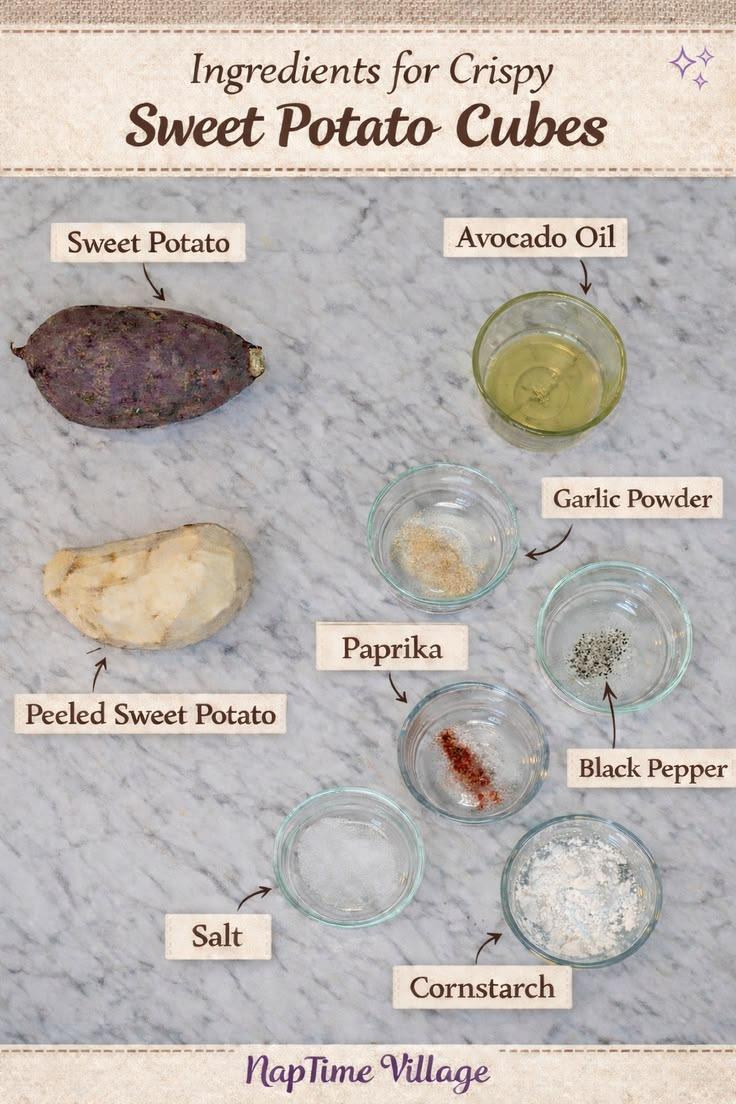
Sweet potatoes are the base of the recipe and roast best when they are firm and cut into even 3/4-inch cubes. Similar sizing helps every piece caramelize at the same rate.
Olive oil helps the sweet potatoes brown and crisp instead of drying out in the oven. It also helps seasoning stick evenly to each cube.
Salt brings out the natural sweetness and prevents the final dish from tasting flat. Start with the listed amount, then adjust after roasting if needed.
Black pepper adds a mild savory bite that balances the sweet flavor of the potatoes. A small amount goes a long way, especially for kid-friendly versions.
Smoked paprika is optional, but it adds a subtle smoky depth and a warmer color. Use it when you want a more savory profile without extra heat.
Garlic powder is optional and works best as a light background flavor. A pinch is enough to add aromatic depth without overpowering the sweet potato.
Preheat oven
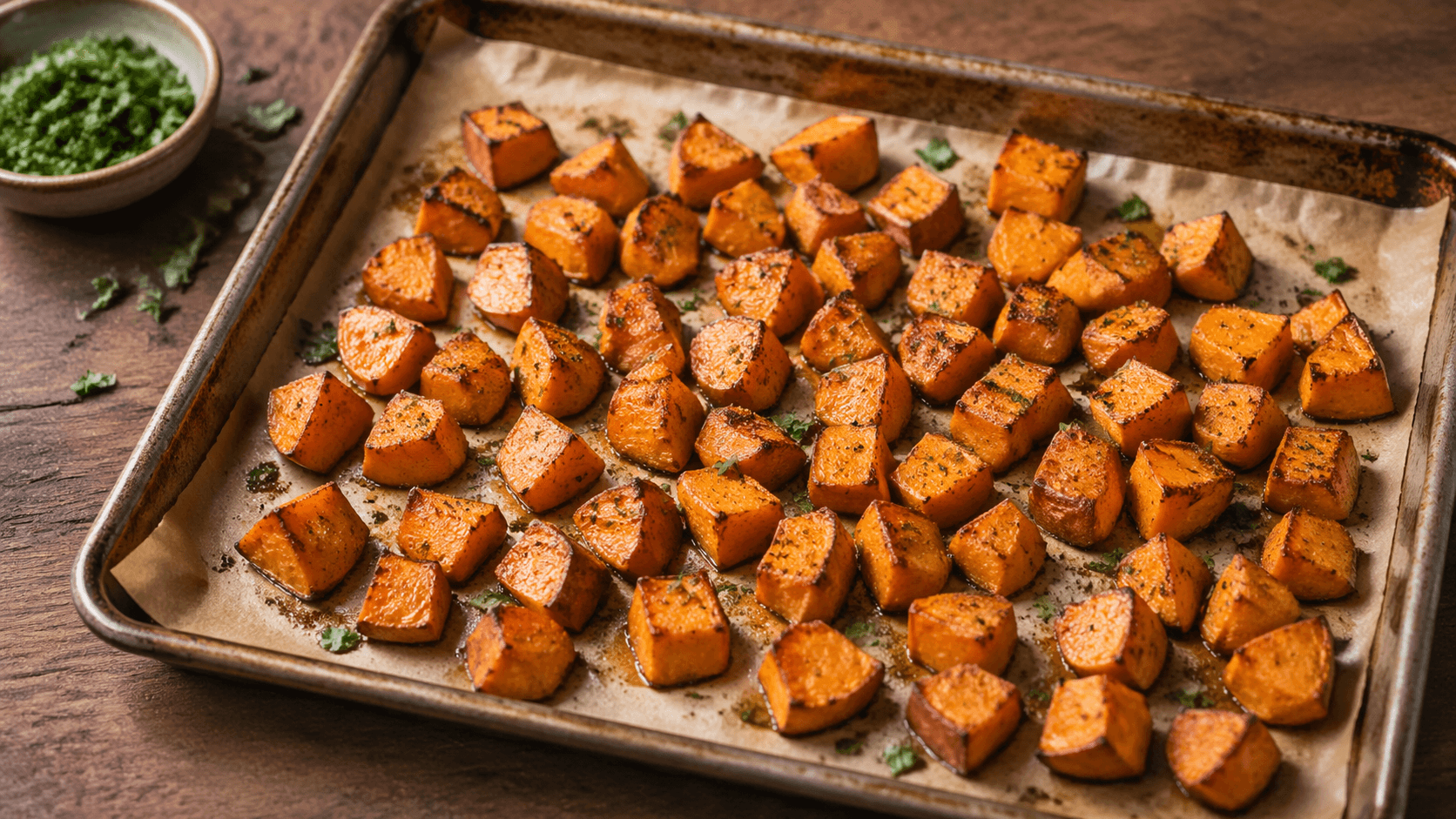
Preheat oven to 425°F (218°C). Higher heat helps the sweet potatoes develop crispy edges.
Cut sweet potatoes
Peel if desired and cut into 3/4-inch cubes. Keep pieces similar in size so they cook evenly.
Season
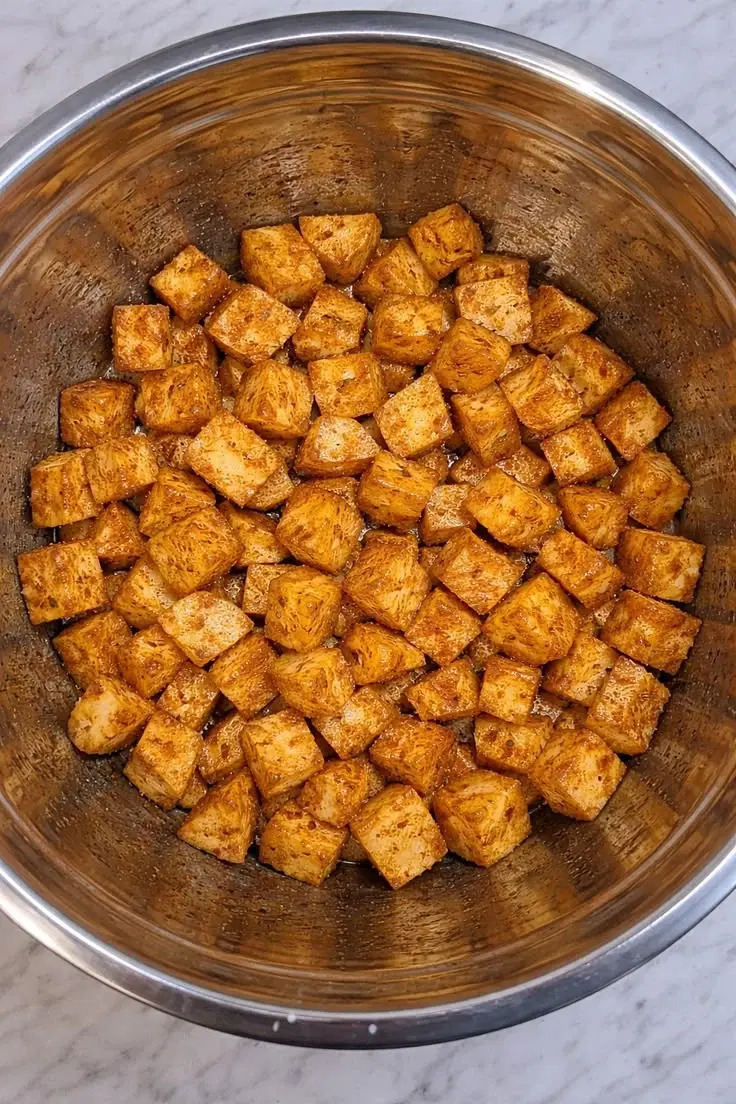
Combine sweet potatoes with oil, salt, pepper, and optional spices in a mixing bowl. Toss until evenly coated.
Spread on baking sheet
Spread potatoes in a single layer on a sheet pan. Avoid overcrowding to prevent steaming and improve browning.
Roast
Roast 25 to 30 minutes, flipping halfway through. Potatoes are done when edges are caramelized and the inside is soft when pierced with a fork.
Per-serving details
Nutrition Facts
4 servings per container
Amount per serving
Calories
262
Protein 3.6 g
Per batch: 14.4 g
Total Fat 7.6 g
Per batch: 30.5 g
10%
Saturated Fat 1.1 g
Per batch: 4.3 g
6%
Total Carbohydrate 45.8 g
Per batch: 183.3 g
17%
Fiber 6.9 g
Per batch: 27.5 g
25%
Cholesterol 0 mg
Per batch: 0 mg
0%
Sodium 385 mg
Per batch: 1541 mg
17%
Vitamin A 1608 mcg
Per batch: 6432 mcg
179%
Vitamin C 5 mg
Per batch: 22 mg
6%
Vitamin E 1.7 mg
Per batch: 6.7 mg
11%
Calcium 69 mg
Per batch: 278 mg
5%
Iron 1.5 mg
Per batch: 5.8 mg
8%
Magnesium 57 mg
Per batch: 229 mg
14%
Potassium 769 mg
Per batch: 3074 mg
16%
* The % Daily Value tells you how much a nutrient in a serving of food contributes to a daily diet. 2,000 calories a day is used for general nutrition advice.
Nutrition is an estimate and varies by ingredient brands and exact quantities.
Nutrition information is automatically calculated, so should only be used as an approximation.
Optional recipe science
Sweet potatoes: Starchy, moist root that browns via surface dehydration and sugar caramelization; fiber and potassium support fullness and balance.
Olive oil: Coats surfaces for better heat transfer, promotes even browning, protects against drying, and carries fat-soluble aromas from spices.
Salt: Early seasoning draws a little surface moisture, enhances sweetness, and balances flavor; use measured amounts to avoid oversalting.
Black pepper: Adds mild pungency and volatile aromatics that balance natural sweetness without heat.
Smoked paprika: Optional smoky depth and warm color; pigments are oil-soluble, so brief roasting in oil blooms flavor.
Garlic powder: Optional background savoriness; fine particles adhere well and toast quickly, so use sparingly to avoid scorching.
Heat and airflow: A 425°F oven plus a single, uncrowded layer lets steam escape. Dry surfaces drive browning; trapped steam stalls it.
Size control: 3/4-inch cubes equalize cooking so centers soften just as edges brown.
Surface chemistry: Sweet potatoes brown mostly through caramelization of natural sugars once surfaces are dry and hot. Limited Maillard reactions occur because they’re relatively low in proteins compared with white potatoes.
Oil as a conductor: A thin olive oil film improves contact with the hot pan and slows surface water loss just enough for even color without desiccating the interior.
Flip timing: Turning once after initial water loss exposes a drier face to heat, deepening color on both sides without breaking the cubes.
Ingredients
Drying phase first: Early in roasting, most energy boils off water. Little browning occurs until surfaces dry; that’s why overcrowding (more steam) delays color.
Conduction vs. convection: Direct contact with a hot, heavy sheet pan (conduction) jump-starts browning; circulating oven air (convection) accelerates drying. Use both if available.
Oil management: Too little oil leads to parch-then-stick; too much oil inhibits drying and softens edges. The listed amount balances these effects for 2 pounds of cubes.
Salt strategy: Salting before roasting is fine here—pieces are small and the oven is hot—so surface moisture evaporates quickly and browning proceeds.
Good overall fit, with whole-food pattern strongest and energy support the main limiting area.
Based on the recipe as written and estimated nutrition per serving. This score offers comparison context, not individualized health advice.