Prep
12 mins
Cook
25 mins
Total
37 mins
Calories
520 kcal
Protein
44.1 g
Carbohydrates
25.6 g
Serves
4 servings
Fat
25.8 g
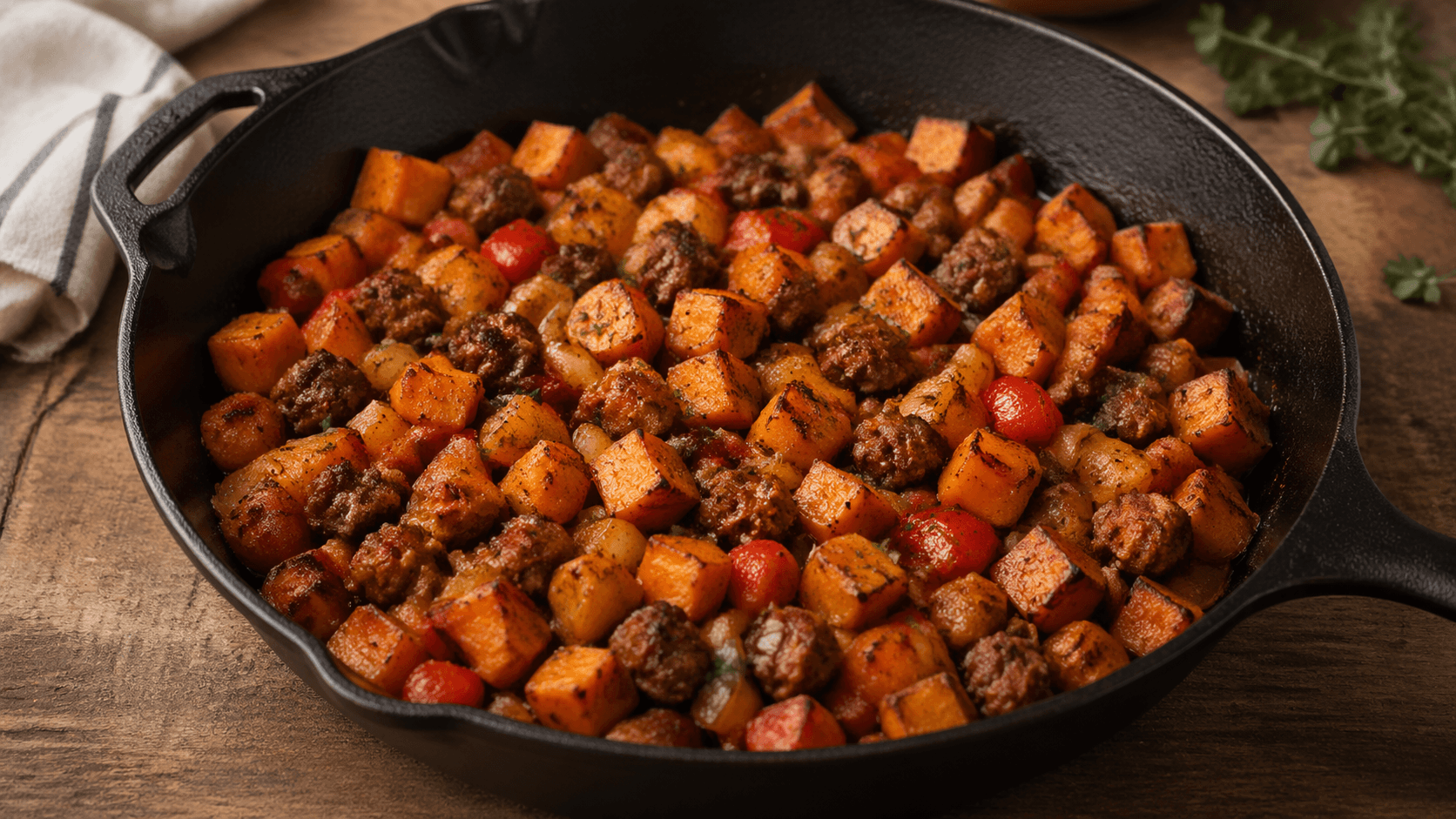
This sweet potato breakfast hash is a one-skillet breakfast with crisp-tender sweet potatoes, browned sausage, peppers, onions, and eggs cooked right on top. It is built for the search intent behind sweet potato breakfast hash: a hearty breakfast that feels filling, cooks in one pan, and does not leave the potatoes hard in the middle. The method gives the sweet potatoes a covered head start, then browns the sausage and vegetables before the eggs go in at the end. It works for weekend brunch, high-protein breakfasts, and meal-prep hash bases you can reheat with fresh eggs.
Sweet Potato Breakfast Hash scores as a solid everyday breakfast because it combines eggs, vegetables, and sweet potatoes in one pan, with sausage being the main reason longevity and inflammation do not score even higher.
Based on the recipe as written and estimated nutrition per serving. This score offers comparison context, not individualized health advice.
This skillet hash manages water and heat in stages. Small, even dice increase sweet potato surface area, so steam can penetrate quickly when the pan is covered. Once tender, uncovering shifts the environment from steaming to dry heat, allowing browning. Sausage goes in once the potatoes are partway cooked so the meat can brown on contact and render flavorful fond. Vegetables follow to soften in those drippings without flooding the pan. Eggs finish last with the lid back on; gentle trapped steam sets the whites while keeping yolks soft.
Key levers: cut size, pan surface area, and lid timing. A heavy, wide skillet keeps temperature stable and gives the potatoes room to brown instead of steaming.
Large skillet with lid
Spatula
Knife and cutting board
Ingredient notes
Chicken or turkey sausage keeps the hash savory while adding protein.
A red, yellow, or orange bell pepper adds sweetness and color, but green bell pepper works too.
Smoked paprika gives a breakfast-skillet flavor without needing much extra seasoning.
If your sweet potatoes are large, use about 3 packed cups diced.
Start the potatoes
Heat skillet over medium. Add oil and sweet potatoes with half the salt. Cover and cook 8 to 10 minutes, stirring occasionally.
Brown the sausage
Add sausage and cook 4 to 5 minutes until browned.
Add vegetables and spices
Stir in onion, pepper, and spices. Cook until vegetables soften and potatoes are tender.
Cook the eggs
Make 4 wells in the hash and crack in eggs. Cover and cook 3 to 5 minutes until whites set.
Serve
Taste for salt and serve hot straight from the skillet.
Per-serving details
Nutrition Facts
4 servings per container
Amount per serving
Calories
520
Protein 44.1 g
Per batch: 176.5 g
Total Fat 25.8 g
Per batch: 103.2 g
33%
Saturated Fat 8.7 g
Per batch: 34.8 g
43%
Total Carbohydrate 25.6 g
Per batch: 102.3 g
9%
Fiber 2.7 g
Per batch: 10.7 g
10%
Cholesterol 924 mg
Per batch: 3697 mg
308%
Sodium 634 mg
Per batch: 2537 mg
28%
Vitamin A 865 mcg
Per batch: 3461 mcg
96%
Vitamin C 42 mg
Per batch: 170 mg
47%
Vitamin E 3.7 mg
Per batch: 14.7 mg
25%
Calcium 162 mg
Per batch: 647 mg
12%
Iron 5.6 mg
Per batch: 22.5 mg
31%
Magnesium 75 mg
Per batch: 301 mg
18%
Potassium 1244 mg
Per batch: 4977 mg
26%
* The % Daily Value tells you how much a nutrient in a serving of food contributes to a daily diet. 2,000 calories a day is used for general nutrition advice.
Nutrition is an estimate and varies by sausage type, egg size, and exact sweet potato amount.
Eggs and sausage make this higher in protein than a carb-only breakfast.
For more fiber, add spinach, mushrooms, black beans, or extra peppers.
Nutrition information is automatically calculated, so should only be used as an approximation.
Optional recipe science
Chicken or turkey sausage: Provides concentrated savory flavor and readily browns, contributing Maillard notes. Processed meat adds sodium and saturated fat; keep portions measured to maintain balance.
Eggs: Supply complete protein and emulsifying lecithin; set gently at the end so whites firm while yolks stay saucy, adding richness without toughening.
Sweet potatoes: Starchy, fiber-rich base that softens with early steam and then browns on the surface for crisp edges. Their natural sugars caramelize, deepening flavor.
Onion: Adds aromatics, sweetness, and prebiotic fibers; softens moisture release during sauté, which helps deglaze sausage fond into the hash.
Bell pepper: Brings water content, color, vitamin C, and mild sweetness; added after browning so it stays tender-crisp instead of collapsing.
Olive oil: Monounsaturated fat that promotes even heat transfer, prevents sticking, and helps fat-soluble flavor compounds bloom.
Kosher salt: Early salting draws a bit of surface moisture from potatoes (aids steaming) and seasons throughout; finish with small pinches to avoid oversalting processed sausage.
Smoked paprika: Delivers smoky depth and color without added sodium; fat-soluble pigments disperse better when heated in oil.
Black pepper: Adds piperine bite and aroma; late addition preserves volatile compounds.
Cut size: Smaller, uniform dice reduce the distance heat must travel to the center, preventing hard middles.
Covered head start: A lid traps vapor, boosting heat transfer and gelatinizing potato starches faster. Uncover to evaporate surface moisture so browning can occur.
Pan crowding: Overcrowding lowers surface temperature and traps steam. Use a large skillet so more potato surfaces contact hot metal.
Fat choice and timing: Olive oil raises the effective surface temperature and helps paprika’s fat-soluble flavors disperse. Keep heat at medium to avoid scorching paprika.
Salting strategy: Season potatoes early, then salt to taste at the end. Sausage and eggs already contribute salinity.
Egg setting: Whites coagulate sooner than yolks. Reintroducing the lid creates gentle steam that sets whites quickly without rubbery yolks.
Lighter protein path: For a cleaner everyday version, use diced chicken, turkey, black beans, or add an extra egg per person instead of sausage. You keep the savory profile while lowering processing.
More plants, better texture: Fold in spinach, kale, or mushrooms in the last minutes. Extra plant volume boosts fiber and helps the hash feel substantial with less meat.
Flavor density without extra sodium: Layer smoked paprika with chili flakes or chipotle, finish with a squeeze of lemon or splash of hot sauce, and top with herbs.
Pan management: If the pan gets wet, hold stirring and keep it uncovered; let moisture drive off so crisping resumes.
Portion balance: Let sweet potatoes and vegetables own most of the skillet real estate; keep sausage as a supporting accent.
Cover to cook through; uncover to crisp. Add eggs only when the base is ready. Balance protein and plants for a hearty, steadier breakfast.
Optional adjustments
Explore lower-sodium, higher-fiber, or more plant-forward variations.
Use these upgrades to make the hash even more supportive without losing the skillet-breakfast feel.
Choose a change to preview how the hash improves with a lighter protein or more vegetables.
Start with one or two upgrades to preview how the recipe improves.
Keep this recipe handy
Tips, variations, storage advice, and quick fixes—all in one place.
Store leftover hash base in an airtight container in the refrigerator for up to 3 days.
For best texture, store cooked eggs separately or cook fresh eggs when reheating.
Reheat the hash base in a skillet over medium-low heat until warm and crisped at the edges.
Microwaving works for speed, but the potatoes will be softer than skillet-reheated hash.
Make it spicy
Add red pepper flakes and a pinch of cayenne.
Make it veggie-heavy
Add spinach or mushrooms in the last 5 minutes.
For meal prep, I make the hash base ahead and cook the eggs fresh when reheating so the yolks do not turn chalky.
If potatoes stay hard, add a splash of water, cover the skillet, and cook 3 to 5 minutes longer.
If potatoes brown too fast, lower the heat and cover briefly so the centers can catch up.
If eggs overcook, lower the heat before adding them and start checking after 3 minutes.
If the hash tastes flat, add another pinch of salt, smoked paprika, or a splash of hot sauce before serving.
If the hash turns watery, keep the pan uncovered and increase heat slightly; stop stirring to let moisture evaporate and the surface re-crisp.
How do I get crispy sweet potatoes in breakfast hash?
Dice the sweet potatoes small, cook them covered first so they soften, then uncover and let them sit between stirs so the edges can brown.
Can I make sweet potato breakfast hash ahead of time?
Yes. Cook the sweet potato, sausage, pepper, and onion base ahead and refrigerate it for up to 3 days. Reheat in a skillet and add fresh eggs at the end.
Can I add eggs directly to the hash?
Yes. Make small wells in the cooked hash, crack in the eggs, cover the skillet, and cook until the whites are set.
What protein can I use instead of sausage?
Use black beans, diced chicken, turkey, crumbled tofu, or tempeh. If using a lean protein, add a little extra seasoning so the hash still tastes savory.
Why are my sweet potatoes still hard?
The pieces may be too large, the skillet may be crowded, or the pan may need a covered steaming step. Add a splash of water, cover, and cook until tender.
What’s the best skillet material for hash?
Cast iron or heavy stainless holds heat well and promotes browning. Use a wide pan so potatoes contact the hot surface instead of steaming.
Can I roast the sweet potatoes first?
Yes. Roast diced sweet potatoes on a sheet pan until tender and browned, then finish the hash on the stovetop with sausage, vegetables, and eggs. This is useful when cooking for a crowd.
Some recipes include affiliate links to products we genuinely use and recommend. If you purchase through these links, we may earn a small commission at no extra cost to you, which helps keep our recipes free to access.
See what other cooks think and share your own tips.
Want to leave a review?
Sign in with your account to rate this recipe and share your notes.
Loading reviews…