Prep
12 mins
Cook
28 mins
Total
40 mins
Calories
179 kcal
Protein
3.3 g
Carbohydrates
33.3 g
Serves
6 bowls
Fat
4.2 g
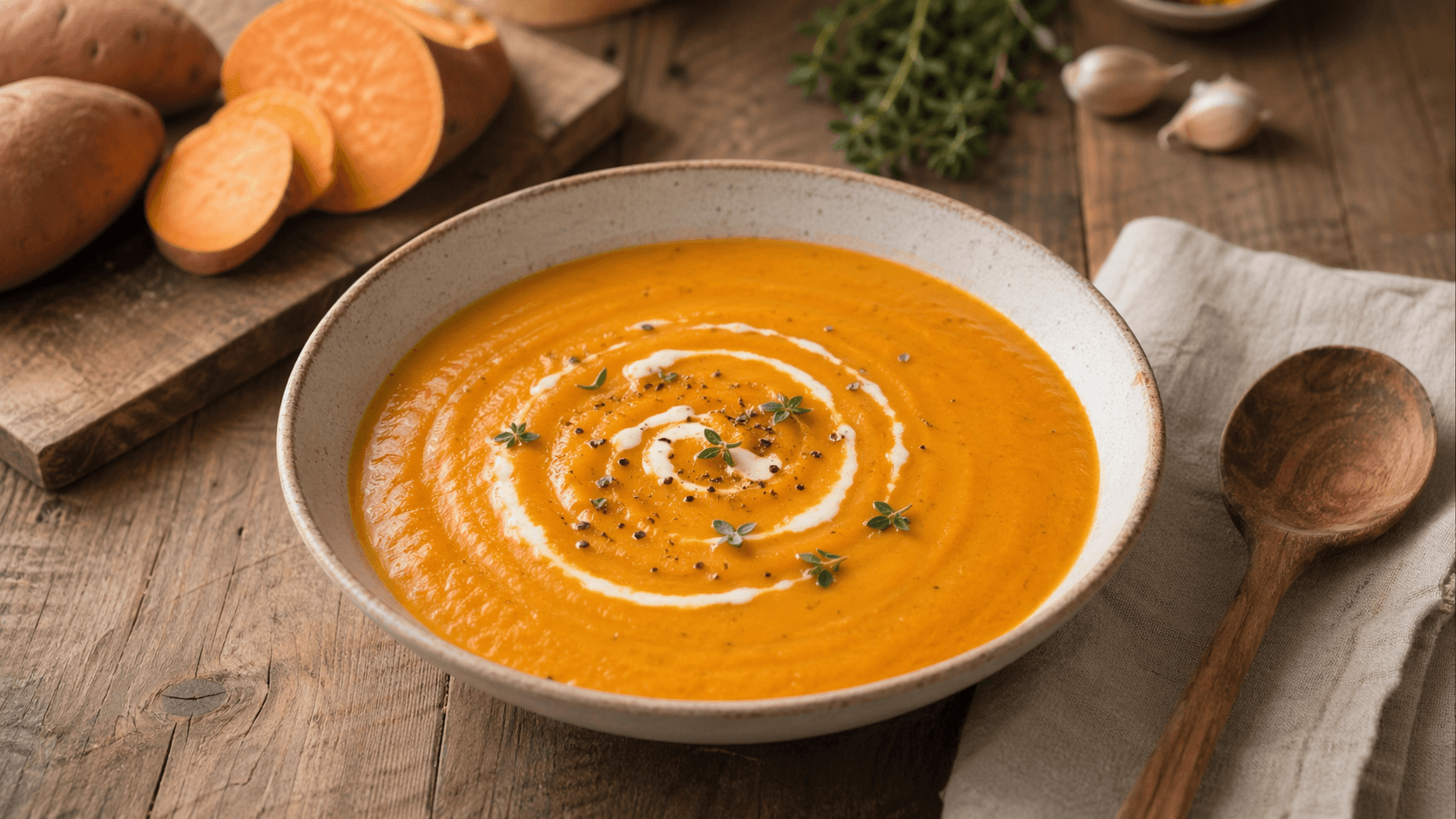
A silky, produce-forward soup where texture comes from sweet potato starches and pectins—not dairy. Sweating onion and briefly blooming garlic builds savory depth; low-sodium broth sets the consistency; a modest pour of light coconut milk finishes the emulsion. Blend until smooth, then balance the soup’s natural sweetness with salt, black pepper, and a touch of acid. For a steadier, more filling meal, pair with legumes or a protein side.
This soup’s creaminess is a starch-and-pectin story, not a dairy story. As sweet potatoes simmer, their starch granules swell and gelatinize, while pectin in the cell walls dissolves—both processes thicken the liquid and create a velvety base once blended. Blending adds shear that disperses starch and suspended solids into a stable, spoon-coating puree. Oil from the sauté and a modest finish of light coconut milk add fat to help emulsify flavor compounds and improve carotenoid absorption. Season after blending—viscosity changes how we perceive salt and sweetness. Use acid (lemon or vinegar) to brighten and counter the natural sweetness before reaching for more salt.
Dutch oven or soup pot
Immersion blender
Countertop blender (optional, for ultra-smooth batches)
Ladle
Chef's knife and cutting board
Measuring cups and spoons
Ingredient notes
Sweet potatoes create the creamy body of the soup without heavy cream.
Light coconut milk adds silkiness without overpowering the savory flavor.
Low-sodium vegetable broth lets you control the final salt level.
Onion and garlic keep the soup savory so it does not taste like a sweet puree.
Saute aromatics
Warm oil over medium heat and cook onion until soft. Add garlic and cook 30 seconds.
Simmer
Add sweet potatoes and broth. Bring to a boil, reduce, and simmer 18 to 20 minutes until very tender.
Blend
Blend until smooth using an immersion blender or countertop blender.
Finish
Stir in coconut milk and warm for 2 to 3 minutes.
Serve
Taste and adjust seasoning. Serve warm with optional toppings.
Per-serving details
Nutrition Facts
6 bowls servings per container
Amount per serving
Calories
179
Protein 3.3 g
Per batch: 19.6 g
Total Fat 4.2 g
Per batch: 25.4 g
5%
Saturated Fat 4 g
Per batch: 24.2 g
20%
Total Carbohydrate 33.3 g
Per batch: 199.5 g
12%
Fiber 4.7 g
Per batch: 28.2 g
17%
Cholesterol 0 mg
Per batch: 0 mg
0%
Sodium 560 mg
Per batch: 3357 mg
24%
Vitamin A 1091 mcg
Per batch: 6548 mcg
121%
Vitamin C 5 mg
Per batch: 30 mg
6%
Vitamin E 0.4 mg
Per batch: 2.4 mg
3%
Calcium 58 mg
Per batch: 346 mg
4%
Iron 1.7 mg
Per batch: 10.2 mg
9%
Magnesium 49 mg
Per batch: 296 mg
12%
Potassium 594 mg
Per batch: 3566 mg
13%
* The % Daily Value tells you how much a nutrient in a serving of food contributes to a daily diet. 2,000 calories a day is used for general nutrition advice.
Nutrition is an estimate and varies by broth, coconut milk, and portion size.
Using full-fat coconut milk will increase fat and calories.
Adding beans or lentils will increase protein and fiber.
Nutrition information is automatically calculated, so should only be used as an approximation.
Optional recipe science
Sweet potatoes: Primary thickener; starch granules swell and gelatinize during simmering while pectin softens, creating a naturally creamy, blendable matrix that holds an emulsion and delivers body without dairy.
Onion: Provides aromatic sugars and sulfur compounds that deepen savoriness when sweated; early salting draws moisture to speed softening and helps build a sweeter, more rounded base.
Garlic: Adds volatile sulfur notes that read as savory depth; brief blooming unlocks aroma without tipping into bitterness.
Olive oil: Fat phase for sauteing and blending; carries fat-soluble flavor compounds and improves carotenoid absorption from sweet potatoes while contributing to mouthfeel.
Light coconut milk: Supplies a modest fat and water emulsion that enriches texture and sheen; saturated fats lend silkiness even at small volumes and help stabilize the blended soup.
Low-sodium vegetable broth: Hydration and mineral base that sets viscosity and salinity; using low-sodium keeps seasoning control in your hands and avoids a flat, overly salty finish.
Kosher salt: Controls sweetness perception and lifts aromatics; add gradually and correct after blending since higher viscosity can mask salinity.
Black pepper: Provides piperine heat and aroma that counterbalances sweetness and enhances perception of other savory notes.
Let the vegetables do the thickening. Build savory depth up front, blend thoroughly, and finish with measured fat and a pop of acid. For a stronger everyday meal, add legumes or a protein topping and keep sodium and coconut milk in check.
Keep this recipe handy
Tips, variations, storage advice, and quick fixes—all in one place.
Cool quickly, then refrigerate in airtight containers for up to 4 days.
Freeze in portioned containers or freezer bags (lay flat) for up to 3 months.
Reheat gently on the stove over low to medium heat; avoid vigorous boiling after adding coconut milk.
Stir well after reheating and add a splash of broth or water if the soup thickens.
Add crunchy toppings only at serving so they stay crisp.
Spiced version
Add curry powder and ginger for a warmer profile.
Protein boost
Top with Greek yogurt or white beans.
Smoky chipotle-lime
Blend in a small chipotle in adobo and finish with lime juice for smoke, heat, and acidity.
Thai-leaning
Stir in red curry paste and finish with lime juice and cilantro; keep coconut milk moderate so it stays balanced.
Ginger–turmeric
Bloom grated ginger and ground turmeric with the aromatics; finish with black pepper and lemon for lift.
I salt the onions early to speed softening and build a sweeter, more savory base before adding the potatoes.
I taste after blending and usually add a small squeeze of lemon if the soup leans too sweet.
I hold back 1 cup of broth during simmering and add it after blending until the spoon-coating texture feels right.
For freezer lunches, I portion the soup without toppings so reheating stays simple.
If soup tastes too sweet, add black pepper, lemon juice, or a splash of vinegar.
If soup is too thin, simmer uncovered until it reduces and thickens.
If soup is too thick, add warm broth a little at a time.
If soup is grainy, the sweet potatoes likely need more cooking or more thorough blending.
If coconut flavor is too strong, add extra broth and a little lemon to rebalance.
If the soup separates after reheating, re-emulsify with an immersion blender; a teaspoon of tahini or nut butter can help bring it back together.
How do I make sweet potato soup extra smooth?
Cook the sweet potatoes until fully tender, then blend thoroughly with an immersion blender or in careful batches with a countertop blender.
Can I freeze sweet potato soup?
Yes. Cool completely, store in airtight portioned containers, and freeze for up to 3 months. Thaw overnight before reheating.
How can I thin soup that is too thick?
Add warm broth a little at a time while stirring until the soup reaches your preferred texture.
Can I make creamy sweet potato soup without coconut milk?
Yes. Use extra broth for a lighter soup, or use a splash of cream, half-and-half, or cashew cream if dairy-free is not required.
Why does my sweet potato soup taste bland?
It likely needs more salt, pepper, or acid. Taste after blending and add a squeeze of lemon juice or a small splash of vinegar if the flavor feels flat.
Can I use water instead of broth?
Yes, but you’ll need to build flavor with well-sweated aromatics and careful seasoning. A pinch of mushroom powder and a squeeze of lemon can help replace some of the depth you get from broth.
How do I add protein without changing the flavor much?
Blend in cooked white beans or red lentils; they integrate smoothly and take on the soup’s flavors while increasing protein and fiber.
Some recipes include affiliate links to products we genuinely use and recommend. If you purchase through these links, we may earn a small commission at no extra cost to you, which helps keep our recipes free to access.
See what other cooks think and share your own tips.
Want to leave a review?
Sign in with your account to rate this recipe and share your notes.
Loading reviews…