pinterestPinterestamazonAmazoninstagramInstagram
Overalls and Lab Coats

From Soil To Science To DIY

Recipes

Browse by course

All RecipesBaby FoodBreadBreakfastDinnerDrinkLunchSideSoup
Articles

Browse by category

All ArticlesBakingDIYFermentationHomeIngredientsNutritionParenting
CatalogAboutContact
mailMailinstagramInstagrampinterestPinterestamazonAmazon

©2026 Overalls and Lab Coats. All rights reserved.

Privacy Policy•Terms & Conditions•Disclosure Policy

Bread

By Sharon Nissley•Published March 24, 2026•Updated May 14, 2026
Jump To Recipe

Sweet Potato Sourdough Rolls

XFacebookPinterestInstagramBlueskyEmailRedditLinkedIn

Soft sweet potato sourdough rolls with overnight fermentation, tender golden crumb, active starter, and a buttery dinner-roll finish.
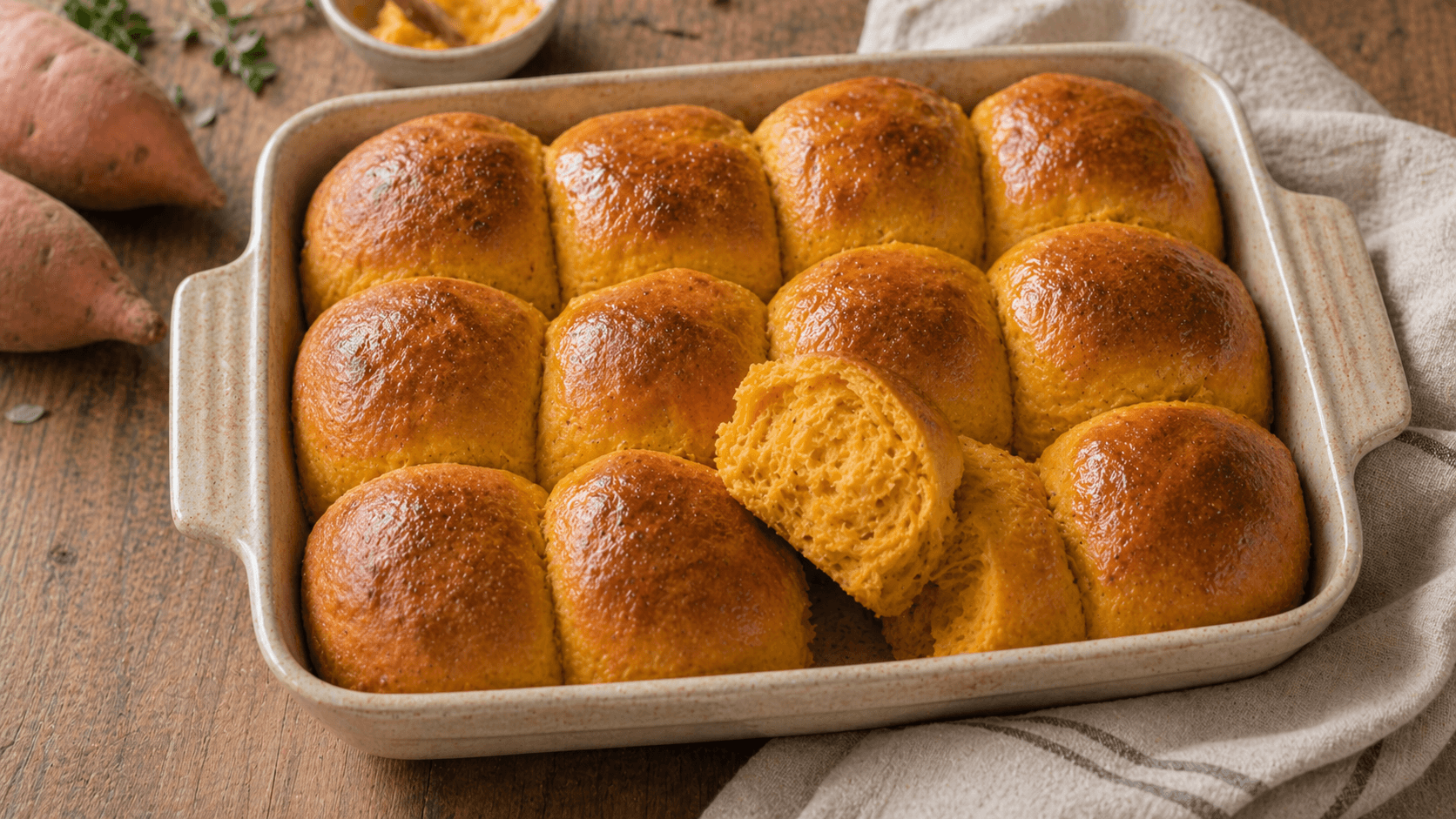
Soft sweet potato sourdough dinner rolls with golden tops in a baking dish

Prep

30 mins active (+ overnight fermentation)

Cook

18-22 mins

Total

14-18 hrs

Calories

226 kcal

Protein

11.3 g

Carbohydrates

40.1 g

Serves

12 rolls

Fat

3.1 g

Soft, lightly sweet, and timed for real life: these sweet potato sourdough rolls use active starter and an overnight cold ferment for gentle acidity, flavor depth, and effortless scheduling. Mashed sweet potato lends starches and pectins that hold water for a plush crumb and natural golden color. Proof fully, bake to amber, and brush with butter for a classic dinner‑roll finish.
Overalls and Lab Coats Score Card

Recipe Score: 60

Good overall fit, with metabolic strongest and longevity the main limiting area.

OALC v3.5 model
Longevity
Some supportive signals, but mixed overall
49
Moderate
Metabolic
Reasonably steady for most meals
64
Good
Inflammation
Mostly supportive with a few tradeoffs
63
Good
Balanced
Good everyday balance
64
Good
Why this scored this way
  • Butter, cream, or heavier cheese pull down the inflammation score.
  • Refined starch keeps the metabolic score more mixed.

Improve this recipe

  • Swap part of the refined starch for beans, lentils, chickpea pasta, or a higher-fiber grain.
  • Add spinach, broccoli, peppers, beans, or a side salad to raise plant density.
See all improvements
Ingredient swaps
  • Swap part of the refined starch for beans, lentils, chickpea pasta, or a higher-fiber grain.
  • Shift some butter, cream, or heavier cheese toward olive oil, Greek yogurt, or a lighter sauce base.
  • Liquid: Use water for a cleaner flavor and slightly lighter profile; milk increases browning and dairy aroma; water kefir adds mild tang.
  • Sweetener: Maple syrup brings deeper caramel notes; honey is lighter and floral.
Additions
  • Add spinach, broccoli, peppers, beans, or a side salad to raise plant density.
  • Add beans, lentils, edamame, or seeds for more fiber and steadier energy.
  • Use olive oil, avocado, nuts, or seeds to improve fat quality.
Portion tips
  • Keep starch portions moderate and build the plate around protein and vegetables.
  • Keep richer fats moderate when the meal already includes cheese or creamy ingredients.
Best version build
  • Best version: lean protein, more vegetables, olive-oil-forward fats, and a higher-fiber starch.

Recipe Mechanics

This is an enriched sourdough system tuned for softness and scheduling. Bread flour supplies the gluten network; fat, milk sugars, and sweet potato starches/pectins interrupt that network enough to keep the crumb tender. An autolyse‑style rest hydrates flour and sweet potato so the dough strengthens with less kneading. The overnight cold ferment slows yeast and bacteria, building flavor while tightening the dough for cleaner shaping. Final proof is intentionally generous so the enriched dough bakes up light instead of tight.

Preparation Science

Hydration management: Sweet potato puree carries bound water that releases during mixing, so the dough may feel firmer at first and then relax. The 30‑minute rest lets starches and proteins hydrate before you add fat and salt, boosting extensibility without stickiness.

Sweet Potato Sourdough Rolls photo

Delayed enrichment: Adding butter and salt after the rest prevents early gluten inhibition and helps the dough reach a smooth, elastic state with less kneading.

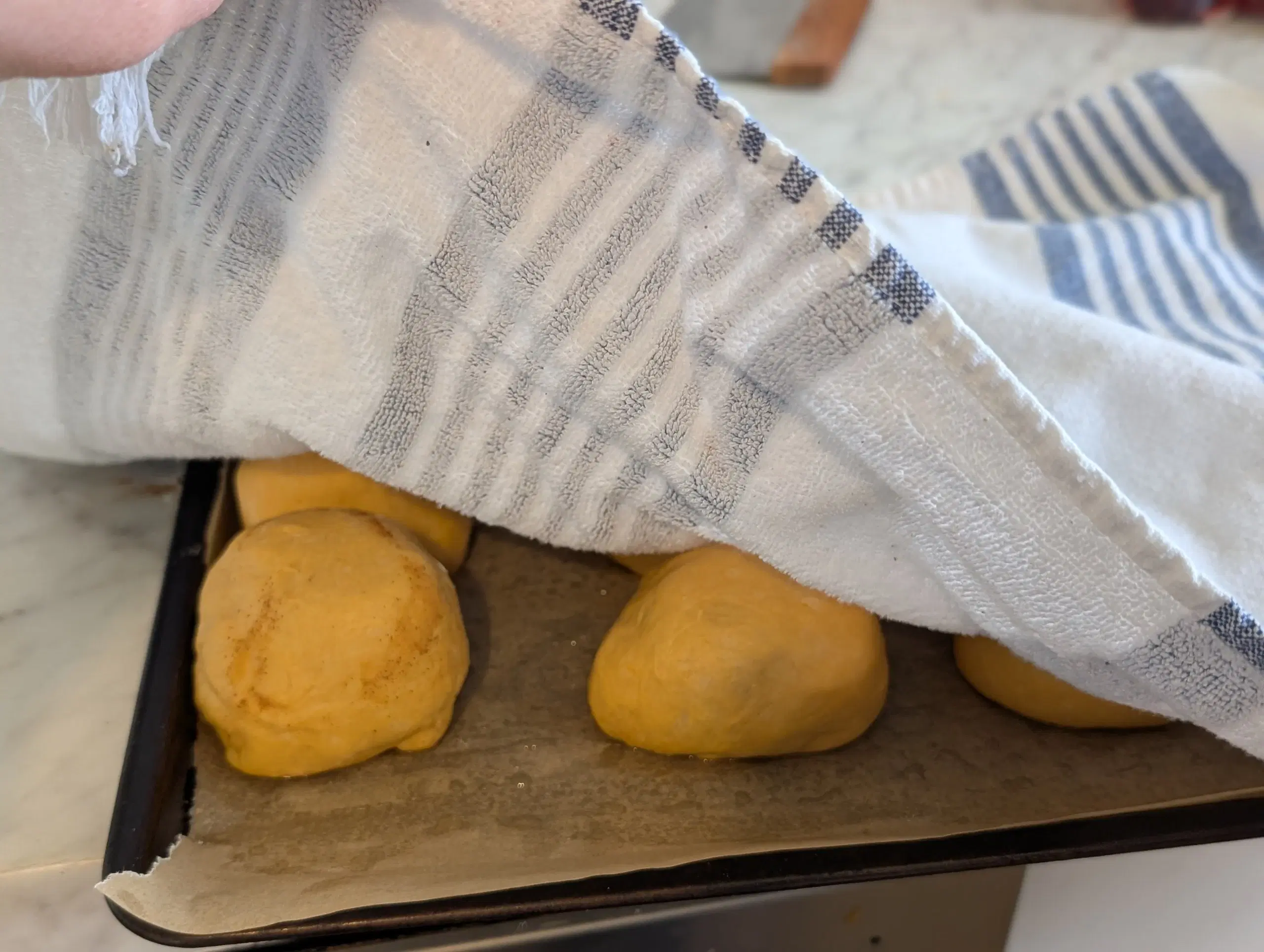
Cold fermentation: Chilling slows yeast and LAB activity, increases flavor complexity, and firms the dough so division and shaping are tidy. Expect slower final proof compared with lean doughs.

Proof cues: Properly proofed rolls look swollen and feel marshmallow‑soft. A fingertip dent should slowly spring back and leave a gentle impression; fast rebound means under‑proofed, and no rebound means over‑proofed.

Sweet Potato Sourdough Rolls photo

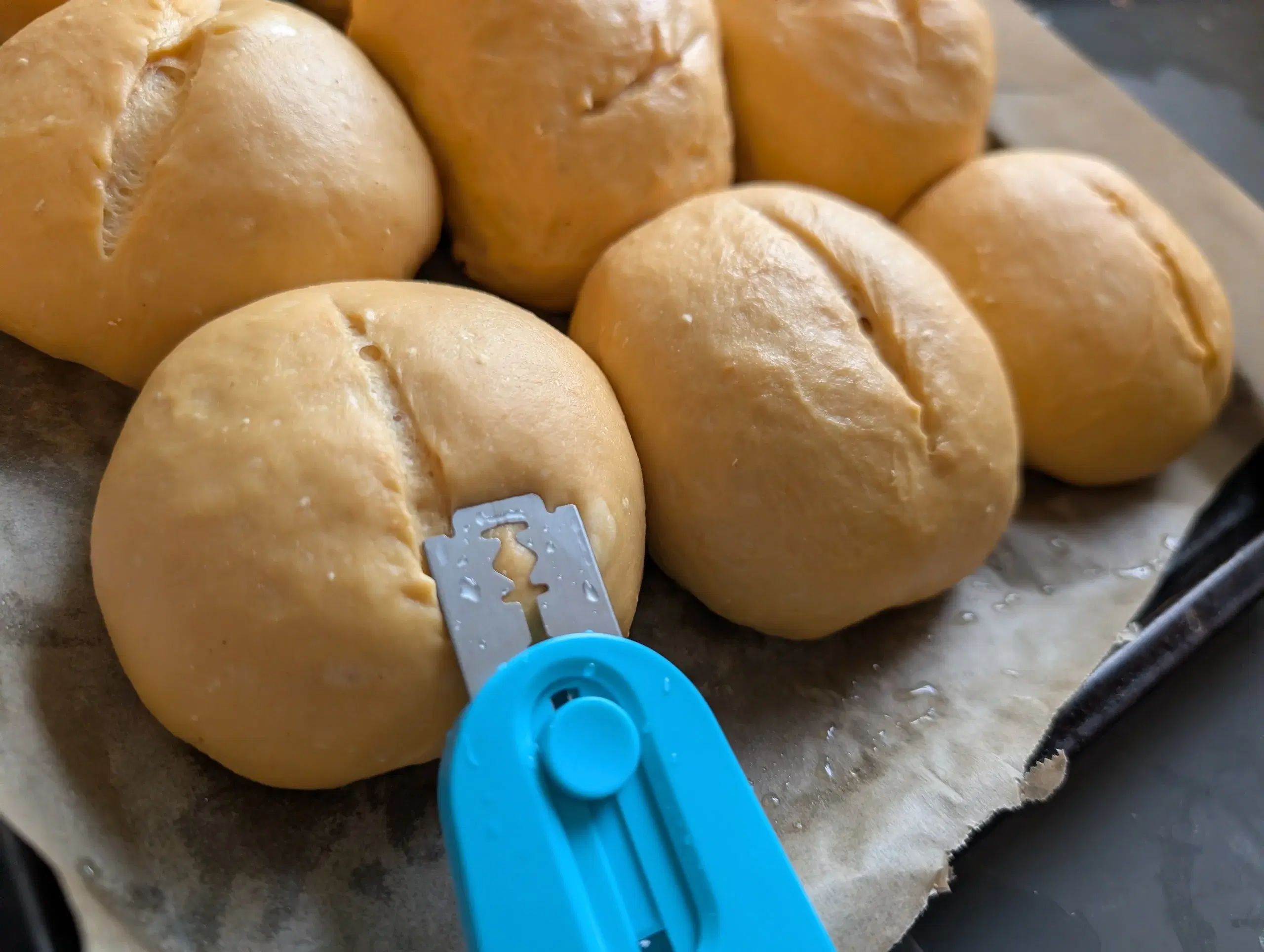
Baking physics: A 375 F bake balances internal set with exterior browning. Sugars from sweet potato, milk, and honey/maple accelerate color; tent with foil near the end if tops brown too quickly.

Butter brush: Brushing immediately post‑bake traps steam under a thin fat layer, softening the crust and carrying fat‑soluble aromas to the surface.

Optimization opportunities

Scheduling: If kitchen temperature is cool, extend the room‑temp rest before chilling to 90 minutes for a head start on fermentation; if warm, chill earlier to prevent over‑acidification that can tighten crumb.

Hydration tuning: If using canned or looser puree, reserve 10–15 g of liquid at mix and add as needed during kneading to maintain a supple, slightly tacky dough that clears the bowl.

Flour blend: For more flavor and minerals without compromising softness, swap 10–15% of the bread flour with fine whole wheat or spelt. Expect slightly faster fermentation; proof by feel.

Sodium awareness: The recipe’s salt provides structure and flavor. If you prefer a subtler salt profile, reduce to 7–8 g and compensate with a slightly longer final proof for comparable strength.

Dairy choice: Milk maximizes browning and aroma; water yields a cleaner wheaty flavor and marginally lighter nutrition profile; kefir increases tang. Pick based on the flavor/browning trade‑off you want.

Finish options: For a dairy‑free soft top, brush with neutral oil or olive oil; for sheen without added fat, steam the pan lightly by covering for 2–3 minutes after baking, then uncover to avoid sogginess.

Pan geometry: A snug 9×13 pan encourages pull‑apart sides and vertical lift. For more crust, space rolls farther apart on a parchment‑lined sheet.

Practical takeaway

Let the dough rest before adding butter and salt, proof fully, and use the fridge to control flavor and timing. Sweet potato’s starches and pectins deliver moisture‑holding power—the main reason these rolls stay soft a day later.

Personal cooking tips

  • I hold back 10–15 g of liquid until the butter is mixed in; it’s easier to add a splash than rescue an over‑hydrated enriched dough.

  • For holiday service, I bake mid‑day, cool 20 minutes, wrap while slightly warm, then rewarm covered right before dinner and brush with fresh butter.

Equipment

  • Kitchen scale

  • Large mixing bowl or stand mixer bowl

  • Stand mixer with dough hook (optional, but helpful for enriched dough)

  • Bench scraper

  • 9×13 inch baking dish or similar buttered dish

  • Plastic wrap or lid

  • Pastry brush

  • Instant‑read thermometer (optional, for doneness; target ~198–202 F center)

Ingredients

Soft sweet potato sourdough dinner rolls with golden tops in a baking dish

Sweet Potato Sourdough Rolls

Author: Sharon Nissley

0.00 from 0 votes0 comments

Prep time

30 mins active (+ overnight fermentation)

Cook time

18-22 mins

Total time

14-18 hrs

Yield

12 rolls

Servings
UnitsStandard
Keep awakeAuto-sleepNot supported
  • Proteins
  • Fiber / plants
  • Fats
  • Flavor / spices

Ingredient notes

  • Bread flour gives the rolls enough structure while still baking up soft.

  • Milk gives the most classic dinner-roll flavor and browning; water keeps the dough simpler; water kefir adds more tang.

  • Honey and maple syrup both work well. Maple gives a slightly deeper, warmer sweetness.

  • Butter in the dough softens the crumb, and melted butter after baking keeps the tops tender.

Step-by-step

12 rolls
  1. 1

    Mix the dough (night before)

    • Ingredients:
      • 500 g bread flour
      • 200 g milk, water, or water kefir
      • 150 g mashed sweet potato
      • 120 g active sourdough starter
    • Action: Mix until no dry flour remains. Let the dough rest for 30 minutes to hydrate the flour.
  2. 2

    Add enrichments and knead

    • Ingredients:
      • 25 g honey or maple syrup
      • 9 g salt
      • 30 g softened butter
    • Action: Add the sweetener, salt, and butter, then knead until smooth and elastic, about 6 to 8 minutes in a mixer or by hand.
  3. 3

    Bulk fermentation

    • Ingredients:
      • Dough
    • Action: Cover and let the dough rest at room temperature for 1 hour. Transfer to the refrigerator and ferment overnight.
  4. 4

    Warm slightly and divide (next morning)

    • Ingredients:
      • Chilled dough
    • Action: Remove the dough from the refrigerator and let it sit at room temperature for 45 to 60 minutes. Divide into 12 equal pieces, about 85 g each.
  5. 5

    Shape the rolls

    • Ingredients:
      • Divided dough pieces
    • Action: Shape each piece into a tight ball and place in a buttered baking dish, leaving a little space between the rolls.
  6. 6

    Final proof

    • Ingredients:
      • Shaped rolls
    • Action: Let the rolls rise until soft and puffy, about 2 to 3 hours at room temperature or faster in a proof setting around 75 to 80 F.
  7. 7

    Bake

    • Ingredients:
      • Proofed rolls
    • Action: Bake at 375 F for 18 to 22 minutes, until golden brown on top and baked through.
  8. 8

    Brush and serve

    • Ingredients:
      • Melted butter (optional)
    • Action: Brush with melted butter immediately after baking for a softer, shinier top.

Step insights

  1. The overnight cold fermentation improves flavor and makes the dough easier to shape cleanly the next morning.

Nutrition

Nutrition Facts

12 rolls servings per container

Serving size1 serving

Amount per serving

Calories

226

% Daily Value*

Protein 11.3 g

Per batch: 135.8 g

Total Fat 3.1 g

Per batch: 37.6 g

4%

Saturated Fat 0.4 g

Per batch: 5.1 g

2%

Total Carbohydrate 40.1 g

Per batch: 481 g

15%

Fiber 3.1 g

Per batch: 37.7 g

11%

Cholesterol 1 mg

Per batch: 16 mg

0%

Sodium 336 mg

Per batch: 4036 mg

15%

Vitamin A 64 mcg

Per batch: 763 mcg

7%

Vitamin C 1 mg

Per batch: 9 mg

1%

Vitamin E 0.6 mg

Per batch: 6.7 mg

4%

Calcium 43 mg

Per batch: 521 mg

3%

Iron 2.8 mg

Per batch: 33.6 mg

16%

Magnesium 32 mg

Per batch: 388 mg

8%

Potassium 221 mg

Per batch: 2653 mg

5%

* The % Daily Value tells you how much a nutrient in a serving of food contributes to a daily diet. 2,000 calories a day is used for general nutrition advice.

Nutrition notes

  • Nutrition is estimated with 2% milk, a 100% hydration sourdough starter, and no optional butter brush.

  • Using water or water kefir instead of milk lowers calories and saturated fat slightly.

Nutrition information is automatically calculated, so should only be used as an approximation.

Overalls and Lab Coats logo

About Overalls and Lab Coats

Overalls and Lab Coats is a family-run site from Sharon and Austin Nissley. We share tested recipes, garden-to-table ideas, science-backed kitchen learning, and practical DIY to help families cook confidently and live resourcefully.

Read more about Overalls and Lab Coats
0.00 from 0 votes0 comments

What to serve with

  • Sweet potato soup or butternut squash soup for a like‑meets‑like pairing

  • Roasted chicken or turkey; the lightly sweet crumb balances savory drippings

  • Ham or pot roast; the soft texture soaks up sauces well

  • Herb butter, cultured butter, or honey for simple toppings

  • Leftover roll sliders with turkey, cranberry, and a crunchy slaw

Why it works

1

Sweet potato adds moisture, potassium, and some fiber compared with standard white dinner rolls.

2

Overnight sourdough fermentation builds flavor without requiring commercial yeast.

3

Honey or maple syrup adds only light sweetness, so these rolls stay savory enough for meals.

Nutrition

Nutrition Facts

12 rolls servings per container

Serving size1 serving

Amount per serving

Calories

226

% Daily Value*

Protein 11.3 g

Per batch: 135.8 g

Total Fat 3.1 g

Per batch: 37.6 g

4%

Saturated Fat 0.4 g

Per batch: 5.1 g

2%

Total Carbohydrate 40.1 g

Per batch: 481 g

15%

Fiber 3.1 g

Per batch: 37.7 g

11%

Cholesterol 1 mg

Per batch: 16 mg

0%

Sodium 336 mg

Per batch: 4036 mg

15%

Vitamin A 64 mcg

Per batch: 763 mcg

7%

Vitamin C 1 mg

Per batch: 9 mg

1%

Vitamin E 0.6 mg

Per batch: 6.7 mg

4%

Calcium 43 mg

Per batch: 521 mg

3%

Iron 2.8 mg

Per batch: 33.6 mg

16%

Magnesium 32 mg

Per batch: 388 mg

8%

Potassium 221 mg

Per batch: 2653 mg

5%

* The % Daily Value tells you how much a nutrient in a serving of food contributes to a daily diet. 2,000 calories a day is used for general nutrition advice.

Nutrition notes

  • Nutrition is estimated with 2% milk, a 100% hydration sourdough starter, and no optional butter brush.

  • Using water or water kefir instead of milk lowers calories and saturated fat slightly.

Nutrition information is automatically calculated, so should only be used as an approximation.

Tips & tricks

  • Use a very smooth, cooled puree; visible fibers or heat can shred gluten or slacken the dough.
  • Keep the starter at peak or just post‑peak; enriched dough needs strong, active levain.
  • If the dough feels sticky, pause and let it rest 5–10 minutes before adding flour—the starches will finish hydrating and tighten naturally.
  • Shape with firm surface tension so the rolls rise up rather than spread.
  • Proof to puffy and delicate; time is a guide, but feel is reliable.
  • If tops brown fast, tent with foil for the last few minutes to finish baking without over‑coloring.

What to serve with

  • Sweet potato soup or butternut squash soup for a like‑meets‑like pairing

  • Roasted chicken or turkey; the lightly sweet crumb balances savory drippings

  • Ham or pot roast; the soft texture soaks up sauces well

  • Herb butter, cultured butter, or honey for simple toppings

  • Leftover roll sliders with turkey, cranberry, and a crunchy slaw

Storage & reheating

  • Room temperature: Store covered 1–2 days.

  • Refrigerator: Up to 5 days, well wrapped to prevent drying.

  • Freezer: Freeze baked, cooled rolls up to 2 months; thaw wrapped at room temp.

  • Rewarm: 300 F oven for 6–10 minutes until warm; brush with a little butter or oil to refresh the crust.

Personal cooking tips

  • I hold back 10–15 g of liquid until the butter is mixed in; it’s easier to add a splash than rescue an over‑hydrated enriched dough.

  • For holiday service, I bake mid‑day, cool 20 minutes, wrap while slightly warm, then rewarm covered right before dinner and brush with fresh butter.

Troubleshooting

  • Dense crumb: Usually under‑proofing or a sluggish starter. Extend the final proof until the fingertip dent rebounds slowly with a faint impression.

  • Dough too slack: The puree may be wetter than expected. Chill 10–15 minutes, then add 5–10 g flour during a brief knead to restore gentle tack.

  • Rolls spread: Increase shaping tension and use a snug pan so sides support vertical rise.

  • Over‑browning: Lower rack position or tent with foil near the end; sugars from puree and sweetener accelerate color.

  • Too sour: Shorten the initial room‑temp rest before chilling or use starter closer to peak to limit acid build‑up.

Tips & tricks

Tip 1

1
Use a very smooth, cooled puree; visible fibers or heat can shred gluten or slacken the dough.

Tip 2

2
Keep the starter at peak or just post‑peak; enriched dough needs strong, active levain.

Tip 3

3
If the dough feels sticky, pause and let it rest 5–10 minutes before adding flour—the starches will finish hydrating and tighten naturally.

Tip 4

4
Shape with firm surface tension so the rolls rise up rather than spread.

Tip 5

5
Proof to puffy and delicate; time is a guide, but feel is reliable.

Tip 6

6
If tops brown fast, tent with foil for the last few minutes to finish baking without over‑coloring.

Storage & reheating

Storage 1

1

Room temperature: Store covered 1–2 days.

Storage 2

2

Refrigerator: Up to 5 days, well wrapped to prevent drying.

Storage 3

3

Freezer: Freeze baked, cooled rolls up to 2 months; thaw wrapped at room temp.

Storage 4

4

Rewarm: 300 F oven for 6–10 minutes until warm; brush with a little butter or oil to refresh the crust.

Personal cooking tips

  • I hold back 10–15 g of liquid until the butter is mixed in; it’s easier to add a splash than rescue an over‑hydrated enriched dough.

  • For holiday service, I bake mid‑day, cool 20 minutes, wrap while slightly warm, then rewarm covered right before dinner and brush with fresh butter.

Troubleshooting

Fix 1

1

Dense crumb: Usually under‑proofing or a sluggish starter. Extend the final proof until the fingertip dent rebounds slowly with a faint impression.

Fix 2

2

Dough too slack: The puree may be wetter than expected. Chill 10–15 minutes, then add 5–10 g flour during a brief knead to restore gentle tack.

Fix 3

3

Rolls spread: Increase shaping tension and use a snug pan so sides support vertical rise.

Fix 4

4

Over‑browning: Lower rack position or tent with foil near the end; sugars from puree and sweetener accelerate color.

Fix 5

5

Too sour: Shorten the initial room‑temp rest before chilling or use starter closer to peak to limit acid build‑up.

Loading reviews…

Some recipes include affiliate links to products we genuinely use and recommend. If you purchase through these links, we may earn a small commission at no extra cost to you, which helps keep our recipes free to access.

Recipe reviews

See what other cooks think and share your own tips.

–(0)

Want to leave a review?

Sign in with your account to rate this recipe and share your notes.

What cooks are saying

Loading reviews…