pinterestPinterestamazonAmazoninstagramInstagram
Overalls and Lab Coats

From Soil To Science To DIY

Recipes

Browse by course

All RecipesBaby FoodBreadBreakfastDinnerDrinkLunchSideSoup
Articles

Browse by category

All ArticlesBakingDIYFermentationHomeIngredientsNutritionParenting
CatalogAboutContact
mailMailinstagramInstagrampinterestPinterestamazonAmazon

©2026 Overalls and Lab Coats. All rights reserved.

Privacy Policy•Terms & Conditions•Disclosure Policy

Baby Food

By Sharon Nissley•Published March 7, 2026•Updated May 13, 2026
Jump To Recipe

Sweet Potato Baby Food (6+ Months)

XFacebookPinterestInstagramBlueskyEmailRedditLinkedIn

Smooth sweet potato baby food for babies around 6 months and up, with steaming, blending, texture, freezer, and safe reheating tips.
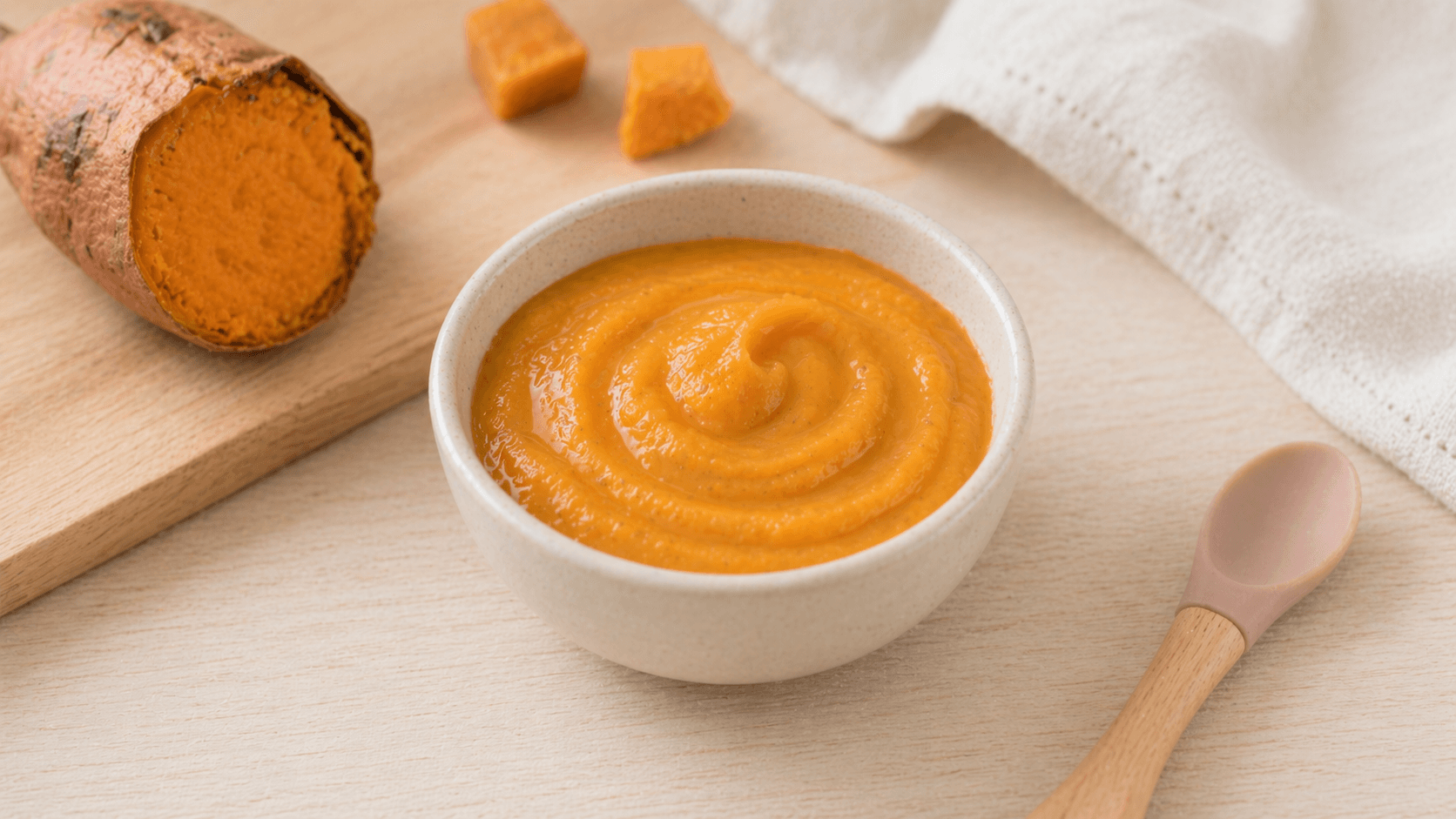
Smooth sweet potato baby food puree in small portions for feeding and freezing

Prep

10 mins

Cook

20 mins

Total

30 mins

Calories

22 kcal

Protein

0.4 g

Carbohydrates

5.2 g

Serves

10 (2-ounce) servings

Fat

0 g

This sweet potato baby food is a simple homemade puree for babies around 6 months and up who are developmentally ready for solids. Steam or boil sweet potatoes until very soft, blend with water, breast milk, or formula, and adjust the texture from thin and smooth to thicker mash as your baby grows. Keep it plain, skip salt, sugar, and honey, and portion small amounts for the fridge or freezer.
Overalls and Lab Coats Score Card

Recipe Score: 77

Sweet Potato Baby Food scores well because it is simple, produce-forward, and minimally processed. The main reason the metabolic score is not higher is that it is a smooth starchy puree without protein or fiber-rich add-ins.

OALC v3.5 model
Longevity
A simple sweet potato puree keeps the recipe whole-food and nutrient-dense.
83
Excellent
Metabolic
Sweet potato is supportive, but a plain puree works best as part of a broader feeding pattern rather than the only component.
68
Good
Inflammation
The ingredient list is gentle and minimally processed, which keeps the inflammation direction supportive.
75
Good
Balanced
This works well for baby feeding because the recipe is simple and easy to pair with other foods as intake expands.
82
Excellent
Why this scored this way
  • Sweet potato brings carotenoids, potassium, and a naturally simple whole-food ingredient base.
  • The recipe stays supportive because it avoids added sugar, excess sodium, and heavy ingredients.
  • The main limitation is that this is a smooth starch puree, so the score improves when it is paired with more variety over time.

Improve this recipe

  • As baby is ready, pair sweet potato with yogurt, beans, lentils, or another puree for more variety.
  • Stir in a little olive oil or nut-free fat source when you want extra energy and smoother texture.
See all improvements
Ingredient swaps
  • Thin with breast milk, formula, or water depending on your feeding stage and texture goals.
Additions
  • As your baby progresses, pair the puree with lentils, beans, yogurt, or other produce purees.
  • Add a small amount of olive oil if you want a slightly richer texture and more satiety.
Portion tips
  • Use this as one part of a varied feeding routine instead of relying on a single puree repeatedly.
Best version build
  • Keep the puree simple, then build variety around it with other produce and age-appropriate protein foods.

Quick Answer

Method: Steam or boil sweet potato until very soft, then blend

Texture: Thin with water, breast milk, or formula as needed

Total time: About 30 minutes

Yield: About ten 2 ounces portions

Storage: Refrigerate short term or freeze in small portions

Sweet Potato Baby Food

Sweet potato puree is a simple first-food option because it blends smooth, tastes naturally mild and sweet, and freezes well in small portions. This recipe keeps the ingredient list plain so you can adjust thickness by feeding stage and avoid unnecessary salt or sweetener.

Smooth sweet potato baby food puree in small portions

When to Offer Sweet Potato Puree

Many babies start solids around 6 months when they are developmentally ready. Look for readiness cues such as sitting with support, good head and neck control, opening the mouth for food, and swallowing instead of pushing food back out. Always follow your pediatrician's guidance for your baby.

Texture by Feeding Stage

For early spoon-feeding, blend the sweet potato very smooth and thin with a small amount of water, breast milk, or formula. As your baby handles thicker textures, use less liquid or mash by hand for a thicker puree. Introduce new textures gradually and supervise feeding closely.

Steam, Boil, or Roast

Steaming keeps the flavor clean and the texture easy to blend. Boiling is simple and fast, but drain well before blending. Roasting gives the sweetest flavor, but make sure the sweet potato is fully soft and remove any browned or dry edges before pureeing for a young baby.

Storage and Freezer Tips

Cool the puree before portioning. Refrigerate small servings in airtight containers for short-term use or freeze in silicone trays for easy single portions. Thaw frozen cubes in the refrigerator and reheat gently, stirring well and checking the temperature before serving.

What Not to Add

Do not add salt, sugar, or honey for babies under 12 months. Honey is not recommended for infants under 1 year because of botulism risk. Keep the base plain and add variety only as your baby is ready for new foods.

Flavor Pairing Ideas

Once your baby has already tried each ingredient separately, sweet potato can pair with apple, pear, avocado, peas, carrots, plain yogurt, or lentils. Add one new food at a time so it is easier to notice reactions.

Why This Recipe Works

The recipe works because very soft sweet potato blends into a naturally creamy puree, and adding liquid gradually lets you control the texture for your baby's stage. Small freezer portions make it practical for low-waste feeding.

Personal cooking tips

  • I freeze baby puree in small cubes so it is easy to thaw only one or two servings at a time.

  • If the puree thickens after chilling, I stir in a little warm water, breast milk, or formula right before serving.

Equipment

  • Steamer basket or pot

  • Blender or food processor

  • Silicone freezer tray

Ingredients

Smooth sweet potato baby food puree in small portions for feeding and freezing

Sweet Potato Baby Food (6+ Months)

Author: Sharon Nissley

0.00 from 0 votes0 comments

Prep time

10 mins

Cook time

20 mins

Total time

30 mins

Yield

10 (2-ounce) servings

Servings
UnitsStandard
Keep awakeAuto-sleepNot supported
  • Fiber / plants
  • Fats
  • Flavor / spices

Ingredient notes

  • Orange sweet potatoes are naturally smooth and slightly sweet when pureed.

  • Water keeps the puree neutral, while breast milk or formula can make the flavor more familiar.

  • Olive oil is optional and should be used only if it fits your baby's feeding plan.

  • Use plain sweet potato only; avoid canned sweet potato pie filling or seasoned mash.

Step-by-step

10 (2-ounce) servings
  1. 1

    Cook sweet potatoes

    • Ingredients:
      • 2 medium sweet potatoes, peeled and cubed
    • Action: Steam or boil 15 to 20 minutes until very soft.
  2. 2

    Blend

    • Ingredients:
      • Cooked sweet potatoes
      • 0.25 to 1/2 cups water, breast milk, or formula for blending
      • 1 teaspoon olive oil (optional)
    • Action: Blend until smooth, adding liquid gradually to reach desired consistency.
  3. 3

    Cool and portion

    • Ingredients:
      • Sweet potato puree
    • Action: Cool completely before portioning into 2 ounces containers or freezer cubes.
  4. 4

    Store

    • Ingredients:
      • Portioned puree
    • Action: Refrigerate short term or freeze for later feeds.
  5. 5

    Serve

    • Ingredients:
      • Stored puree
    • Action: Reheat gently and stir well. Check temperature before serving.

Nutrition

Nutrition Facts

10 (2-ounce) servings per container

Serving size1 serving

Amount per serving

Calories

22

% Daily Value*

Protein 0.4 g

Per batch: 4.1 g

Total Fat 0 g

Per batch: 0.1 g

0%

Saturated Fat 0 g

Per batch: 0 g

0%

Total Carbohydrate 5.2 g

Per batch: 52.3 g

2%

Fiber 0.8 g

Per batch: 7.8 g

3%

Cholesterol 0 mg

Per batch: 0 mg

0%

Sodium 14 mg

Per batch: 143 mg

1%

Vitamin A 184 mcg

Per batch: 1843 mcg

20%

Vitamin C 1 mg

Per batch: 6 mg

1%

Vitamin E 0.1 mg

Per batch: 0.7 mg

1%

Calcium 8 mg

Per batch: 78 mg

1%

Iron 0.2 mg

Per batch: 1.6 mg

1%

Magnesium 7 mg

Per batch: 65 mg

2%

Potassium 88 mg

Per batch: 876 mg

2%

* The % Daily Value tells you how much a nutrient in a serving of food contributes to a daily diet. 2,000 calories a day is used for general nutrition advice.

Nutrition notes

  • Nutrition is an estimate and varies by sweet potato size and the amount of liquid used for blending.

  • Breast milk, formula, yogurt, or added oil will change the nutrition estimate.

  • This puree is intended to complement breast milk or formula, not replace it.

Nutrition information is automatically calculated, so should only be used as an approximation.

Overalls and Lab Coats logo

About Overalls and Lab Coats

Overalls and Lab Coats is a family-run site from Sharon and Austin Nissley. We share tested recipes, garden-to-table ideas, science-backed kitchen learning, and practical DIY to help families cook confidently and live resourcefully.

Read more about Overalls and Lab Coats
0.00 from 0 votes0 comments

What to serve with

  • Breast milk or formula

    thin the puree to a familiar early-feeding texture

  • Plain avocado puree

    add only after avocado has already been introduced separately

  • Apple or pear puree

    gentle fruit pairing after each food has been tolerated separately

  • Plain yogurt

    option for babies already ready for yogurt and dairy foods

Why it works

1

Naturally soft and blendable for beginner textures.

2

Nutrient-dense with carotenoids and potassium.

3

Freezer cubes make small portions easy and low waste.

Nutrition

Nutrition Facts

10 (2-ounce) servings per container

Serving size1 serving

Amount per serving

Calories

22

% Daily Value*

Protein 0.4 g

Per batch: 4.1 g

Total Fat 0 g

Per batch: 0.1 g

0%

Saturated Fat 0 g

Per batch: 0 g

0%

Total Carbohydrate 5.2 g

Per batch: 52.3 g

2%

Fiber 0.8 g

Per batch: 7.8 g

3%

Cholesterol 0 mg

Per batch: 0 mg

0%

Sodium 14 mg

Per batch: 143 mg

1%

Vitamin A 184 mcg

Per batch: 1843 mcg

20%

Vitamin C 1 mg

Per batch: 6 mg

1%

Vitamin E 0.1 mg

Per batch: 0.7 mg

1%

Calcium 8 mg

Per batch: 78 mg

1%

Iron 0.2 mg

Per batch: 1.6 mg

1%

Magnesium 7 mg

Per batch: 65 mg

2%

Potassium 88 mg

Per batch: 876 mg

2%

* The % Daily Value tells you how much a nutrient in a serving of food contributes to a daily diet. 2,000 calories a day is used for general nutrition advice.

Nutrition notes

  • Nutrition is an estimate and varies by sweet potato size and the amount of liquid used for blending.

  • Breast milk, formula, yogurt, or added oil will change the nutrition estimate.

  • This puree is intended to complement breast milk or formula, not replace it.

Nutrition information is automatically calculated, so should only be used as an approximation.

Tips & tricks

  • Do not add salt, sugar, or honey for babies under 12 months.
  • Start thinner for early feeding and thicken the puree gradually as your baby is ready.
  • Add blending liquid slowly so the puree does not become too thin.
  • Always test serving temperature before feeding.
  • Introduce one new food at a time when combining purees.

What to serve with

  • Breast milk or formula

    thin the puree to a familiar early-feeding texture

  • Plain avocado puree

    add only after avocado has already been introduced separately

  • Apple or pear puree

    gentle fruit pairing after each food has been tolerated separately

  • Plain yogurt

    option for babies already ready for yogurt and dairy foods

Storage & reheating

  • Refrigerate in airtight containers for up to 48 hours for best quality.

  • Freeze small portions for up to 2 months for best quality.

  • Thaw frozen puree overnight in the refrigerator.

  • Reheat gently, stir well, and check temperature before serving.

  • Discard leftovers from a bowl or spoon that has already touched the baby's mouth.

Recipe variants

Thicker stage

  • Mash instead of fully blending for older babies.

Mixed puree

  • Blend with pear or carrot once tolerated.

Personal cooking tips

  • I freeze baby puree in small cubes so it is easy to thaw only one or two servings at a time.

  • If the puree thickens after chilling, I stir in a little warm water, breast milk, or formula right before serving.

Troubleshooting

  • If the puree is too thick, add liquid 1 tablespoon at a time and blend again.

  • If the puree is too thin, blend in more cooked sweet potato or chill it briefly so it thickens.

  • If the puree is stringy, blend longer while the sweet potato is still warm.

  • If the puree tastes bland, keep it plain for baby; adults can season their own portion separately.

  • If reheated puree has hot spots, stir well and test the temperature before feeding.

FAQs

Can babies have sweet potato as a first food?

Yes, sweet potato can be offered as a smooth puree when a baby is around 6 months and developmentally ready for solids. Follow your pediatrician's guidance for your baby.

Can I make sweet potato baby food without a blender?

Yes. Cook the sweet potato until very soft, then mash thoroughly with a fork or potato masher and thin with small amounts of liquid.

How long does homemade sweet potato baby food last?

For best quality, refrigerate in airtight containers for up to 48 hours or freeze small portions for up to 2 months.

Can I mix sweet potato puree with breast milk or formula?

Yes. Add a small amount while blending or after reheating to reach the texture your baby handles best.

Can I add salt, sugar, or honey to baby food?

No. Keep baby puree plain. Avoid added salt and sugar, and do not give honey to babies under 12 months because of infant botulism risk.

Tips & tricks

Tip 1

1
Do not add salt, sugar, or honey for babies under 12 months.

Tip 2

2
Start thinner for early feeding and thicken the puree gradually as your baby is ready.

Tip 3

3
Add blending liquid slowly so the puree does not become too thin.

Tip 4

4
Always test serving temperature before feeding.

Tip 5

5
Introduce one new food at a time when combining purees.

Storage & reheating

Storage 1

1

Refrigerate in airtight containers for up to 48 hours for best quality.

Storage 2

2

Freeze small portions for up to 2 months for best quality.

Storage 3

3

Thaw frozen puree overnight in the refrigerator.

Storage 4

4

Reheat gently, stir well, and check temperature before serving.

Storage 5

5

Discard leftovers from a bowl or spoon that has already touched the baby's mouth.

Recipe variants

Thicker stage

  • Mash instead of fully blending for older babies.

Mixed puree

  • Blend with pear or carrot once tolerated.

Personal cooking tips

  • I freeze baby puree in small cubes so it is easy to thaw only one or two servings at a time.

  • If the puree thickens after chilling, I stir in a little warm water, breast milk, or formula right before serving.

Troubleshooting

Fix 1

1

If the puree is too thick, add liquid 1 tablespoon at a time and blend again.

Fix 2

2

If the puree is too thin, blend in more cooked sweet potato or chill it briefly so it thickens.

Fix 3

3

If the puree is stringy, blend longer while the sweet potato is still warm.

Fix 4

4

If the puree tastes bland, keep it plain for baby; adults can season their own portion separately.

Fix 5

5

If reheated puree has hot spots, stir well and test the temperature before feeding.

FAQs

Can babies have sweet potato as a first food?

Yes, sweet potato can be offered as a smooth puree when a baby is around 6 months and developmentally ready for solids. Follow your pediatrician's guidance for your baby.

Can I make sweet potato baby food without a blender?

Yes. Cook the sweet potato until very soft, then mash thoroughly with a fork or potato masher and thin with small amounts of liquid.

How long does homemade sweet potato baby food last?

For best quality, refrigerate in airtight containers for up to 48 hours or freeze small portions for up to 2 months.

Can I mix sweet potato puree with breast milk or formula?

Yes. Add a small amount while blending or after reheating to reach the texture your baby handles best.

Can I add salt, sugar, or honey to baby food?

No. Keep baby puree plain. Avoid added salt and sugar, and do not give honey to babies under 12 months because of infant botulism risk.

Loading reviews…

Recipe reviews

See what other cooks think and share your own tips.

–(0)

Want to leave a review?

Sign in with your account to rate this recipe and share your notes.

What cooks are saying

Loading reviews…

Some recipes include affiliate links to products we genuinely use and recommend. If you purchase through these links, we may earn a small commission at no extra cost to you, which helps keep our recipes free to access.