
Polyphenols and the Human Body: Nature’s Powerful Plant Compounds
When people think about healthy foods, vitamins and minerals often get most of the attention. However, many of the health benefits associated with fruits, vegetables, herbs, tea, with practical context, useful tradeoffs, and science-minded notes.
- Article details
- By Sharon Nissley5 min readUpdated
Article contents
What Are Polyphenols?
When people think about healthy foods, vitamins and minerals often get most of the attention. However, many of the health benefits associated with fruits, vegetables, herbs, tea, coffee, and other plant foods come from a group of naturally occurring compounds called polyphenols.
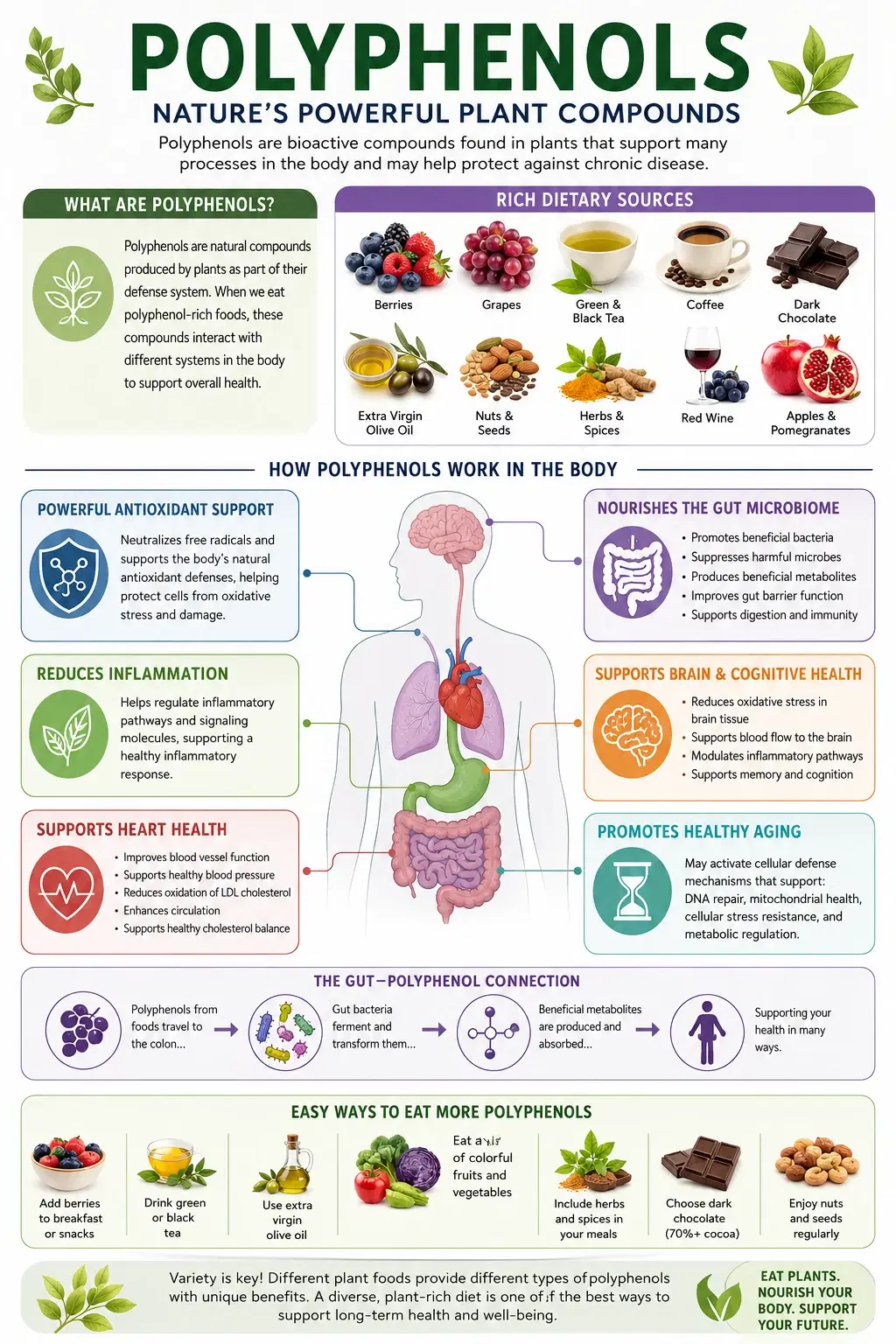
Polyphenols are bioactive compounds produced by plants as part of their natural defense systems. They help protect plants from environmental stressors such as ultraviolet radiation, pests, and disease. When humans consume polyphenol-rich foods, these compounds can interact with numerous biological systems throughout the body.
Researchers have identified more than 8,000 different polyphenols, and growing evidence suggests they may play an important role in supporting long-term health, reducing inflammation, and protecting cells from damage.
Common Sources of Polyphenols
Polyphenols are found in many everyday foods, including:
- Blueberries, strawberries, blackberries, and cherries
- Apples and grapes
- Red cabbage and purple sweet potatoes
- Green and black tea
- Coffee
- Dark chocolate and cocoa
- Extra virgin olive oil
- Nuts and seeds
- Herbs and spices
- Red wine
- Pomegranates
The vibrant colors found in many fruits and vegetables often indicate the presence of polyphenols, particularly compounds known as anthocyanins, which give foods their red, purple, and blue pigmentation.
How Polyphenols Work in the Body
Unlike vitamins that serve specific nutritional roles, polyphenols act more like biological signaling molecules. They interact with cells, enzymes, gut bacteria, and genes in ways that may influence overall health.
Scientists now believe that many of the benefits of polyphenols come not only from their antioxidant activity but also from their ability to regulate important cellular processes.
Supporting Antioxidant Defense
One of the most widely known functions of polyphenols is their antioxidant capacity.
Every day, the body produces unstable molecules called free radicals during normal metabolism. Environmental factors such as pollution, smoking, poor diet, and excessive sun exposure can increase free radical production. When free radicals outnumber the body's defenses, a condition called oxidative stress occurs.
Oxidative stress can damage:
- Cell membranes
- Proteins
- DNA
- Mitochondria
Polyphenols help neutralize free radicals and support the body's natural antioxidant systems. This may reduce cellular damage and contribute to healthier aging.
Polyphenols and Inflammation
Inflammation is a normal part of the body's immune response. However, chronic low-grade inflammation has been linked to numerous health conditions, including cardiovascular disease, type 2 diabetes, obesity, arthritis, and neurodegenerative disorders.
Research suggests that polyphenols can help regulate inflammatory pathways within the body. They may influence signaling molecules such as cytokines and enzymes involved in inflammatory responses.
By helping maintain a balanced inflammatory state, polyphenols may contribute to improved long-term health and resilience against chronic disease.
Benefits for Heart Health
Many of the healthiest dietary patterns in the world, including the Mediterranean diet, are naturally rich in polyphenols.
Studies have found that polyphenol-rich foods may support cardiovascular health by:
- Improving blood vessel function
- Supporting healthy blood pressure levels
- Reducing oxidation of LDL cholesterol
- Enhancing circulation
- Supporting healthy cholesterol balance
Certain polyphenols found in berries, tea, cocoa, and olive oil have been particularly associated with cardiovascular benefits.
While polyphenols are not a replacement for healthy lifestyle habits, they may complement a heart-healthy diet and exercise routine.
Supporting the Gut Microbiome
One of the most exciting areas of polyphenol research involves the gut microbiome.
The human digestive tract contains trillions of microorganisms that influence digestion, immunity, metabolism, and even mental health. Many polyphenols pass through the upper digestive tract largely intact and reach the colon, where they interact with beneficial gut bacteria.
These interactions can:
- Promote growth of beneficial bacteria
- Suppress harmful microbes
- Produce beneficial metabolites
- Improve gut barrier function
Interestingly, gut bacteria also help transform polyphenols into smaller compounds that may be more easily absorbed and utilized by the body.
This creates a mutually beneficial relationship between polyphenols and the microbiome.
Brain and Cognitive Health
Researchers are increasingly studying the relationship between polyphenols and brain health.
Certain polyphenols can cross the blood-brain barrier and may influence processes involved in cognition, memory, and neuronal function.
Potential mechanisms include:
- Reducing oxidative stress in brain tissue
- Supporting healthy blood flow to the brain
- Modulating inflammatory pathways
- Supporting mitochondrial function
Although research is ongoing, diets rich in fruits, vegetables, tea, and other polyphenol-containing foods have been associated with healthier cognitive aging and improved brain function.
Polyphenols and Healthy Aging
Aging is influenced by many biological processes, including oxidative stress, chronic inflammation, mitochondrial dysfunction, and cellular damage.
Because polyphenols interact with several of these pathways simultaneously, many scientists consider them important compounds in longevity research.
Some polyphenols have been shown to activate cellular defense mechanisms involved in:
- DNA repair
- Cellular stress resistance
- Mitochondrial health
- Metabolic regulation
While no single nutrient can stop aging, regularly consuming polyphenol-rich foods may help support healthier aging and improved quality of life over time.
Do You Need Polyphenol Supplements?
Most experts recommend obtaining polyphenols from whole foods whenever possible.
Whole foods provide:
- Fiber
- Vitamins
- Minerals
- Healthy fats
- Thousands of complementary plant compounds
These components often work together in ways that isolated supplements cannot fully replicate.
Supplements may be useful in certain situations, but a diet rich in colorful fruits, vegetables, tea, coffee, herbs, spices, and other plant foods remains the most evidence-based approach.
Practical Ways to Increase Polyphenol Intake
Increasing polyphenol consumption does not require major dietary changes.
Simple strategies include:
- Add berries to breakfast
- Drink green or black tea
- Use extra virgin olive oil
- Eat colorful fruits and vegetables daily
- Include herbs and spices in meals
- Choose dark chocolate with high cocoa content
- Consume a variety of plant foods throughout the week
Variety is important because different foods provide different classes of polyphenols with unique biological effects.
Final Thoughts
Polyphenols are among the most fascinating compounds found in nature. These plant-derived molecules help protect plants from environmental stress, and they appear to offer numerous benefits when included as part of a healthy human diet.
Research suggests that polyphenols may support antioxidant defenses, help regulate inflammation, promote cardiovascular health, nourish beneficial gut bacteria, and contribute to healthy aging. While scientists continue to uncover exactly how these compounds work, the evidence consistently points toward one simple conclusion: eating a diverse range of colorful plant foods is one of the best ways to support overall health.
The next time you enjoy a handful of blueberries, a cup of green tea, or a salad filled with vibrant vegetables, you are doing more than consuming nutrients—you are providing your body with thousands of bioactive compounds that have evolved alongside plants for millions of years and may play an important role in lifelong wellness.