
Anthocyanins Explained: How These Plant Pigments Affect the Human Body
Anthocyanins are colorful plant compounds responsible for the red, blue, and purple shades found in many fruits and vegetables. Research suggests they may support cardiovascular health, reduce oxidative stress, and influence inflammation, making them an important part of a nutrient-dense diet with practical context, useful tradeoffs, and science-minded notes.
- Article details
- By Sharon Nissley1 min readUpdated
Article contents
Anthocyanins Explained: How These Plant Pigments Affect the Human Body
Anthocyanins are naturally occurring plant compounds that give many fruits, vegetables, grains, and flowers their red, purple, blue, and deep black colors. They are part of the flavonoid family, which belongs to a larger group of bioactive compounds known as polyphenols.
You can find anthocyanins in foods like blueberries, blackberries, raspberries, cherries, red grapes, purple cabbage, eggplant skin, black rice, and purple sweet potatoes. Their color is not just decorative. In plants, anthocyanins help protect against sunlight, stress, temperature changes, and environmental damage.
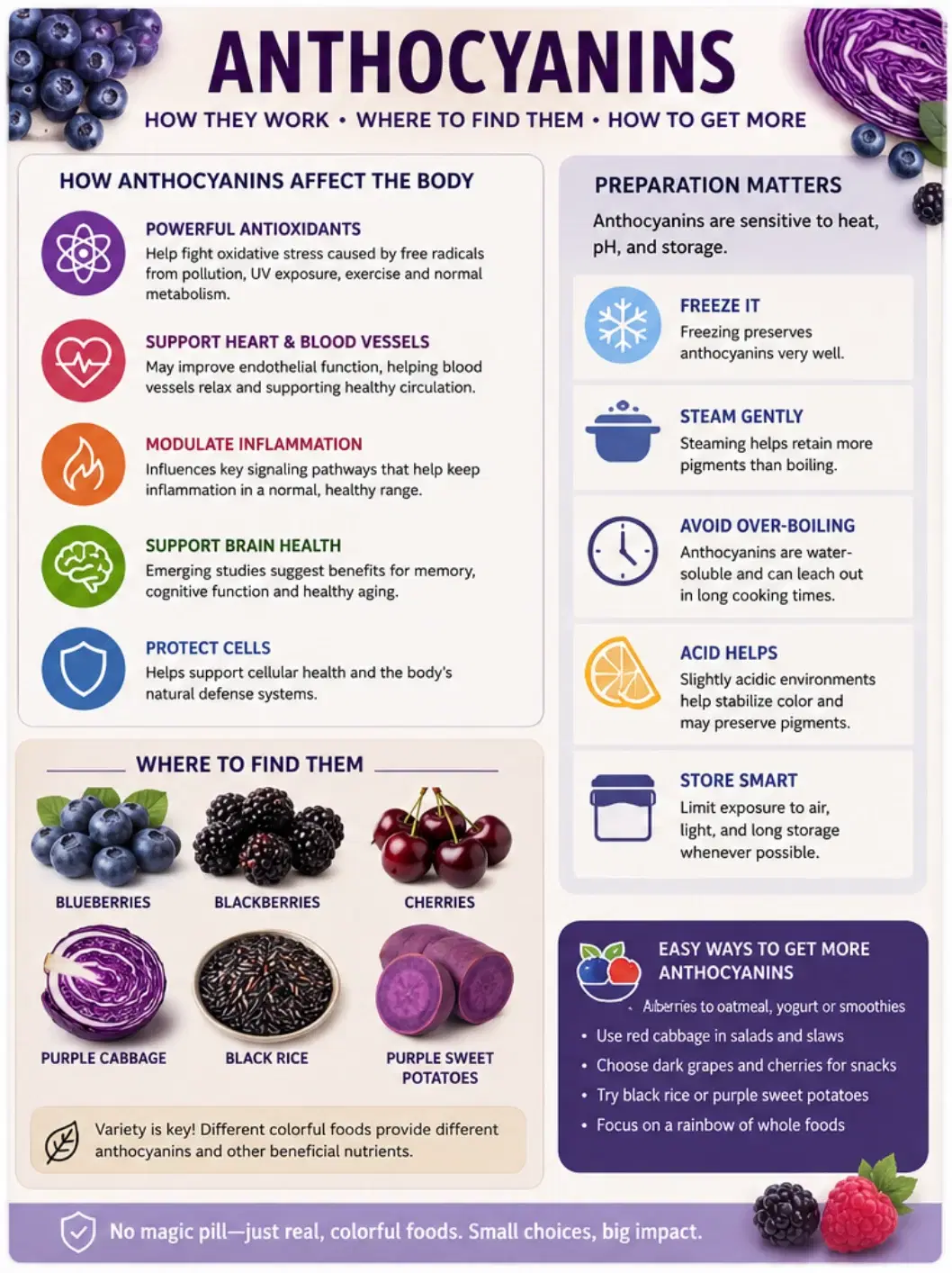
In the human body, anthocyanins are studied for their potential role in antioxidant defense, heart and blood vessel support, inflammation regulation, brain health, and overall cellular protection.
How Anthocyanins Work in the Body
One of the main reasons anthocyanins are interesting is their antioxidant activity. Normal metabolism, pollution, ultraviolet light, stress, and exercise can all produce reactive oxygen species, often called free radicals. When these build up faster than the body can manage them, they may contribute to oxidative stress.
Anthocyanins may help support the body’s antioxidant systems by interacting with these reactive molecules and influencing internal defense pathways. This does not mean anthocyanins act like a cure or a medication, but they may be one reason colorful plant foods are associated with long-term health.
Anthocyanins may also support healthy blood vessel function. Blood vessels are lined with a thin layer of cells called the endothelium. This layer helps regulate blood flow, blood pressure, and circulation. Some research suggests anthocyanin-rich foods may help support normal endothelial function, especially when they are part of an overall nutrient-dense diet.
Inflammation and Cell Protection
Inflammation is not always bad. The body needs inflammation to heal injuries and fight infection. The problem is chronic, low-grade inflammation, which can place stress on tissues over time.
Anthocyanins may help influence signaling pathways involved in inflammation. Instead of shutting inflammation off completely, they appear to support balance. This is important because the goal is not to block the immune system, but to help the body regulate its response more effectively.
Anthocyanins may also help protect cells by supporting normal repair and defense systems. Many anthocyanin-rich foods also contain fiber, vitamin C, minerals, and other polyphenols, which likely work together rather than acting alone.
Brain and Cognitive Support
Anthocyanins are also being studied for their possible effects on brain health. The brain is highly active and uses a large amount of oxygen, which makes it vulnerable to oxidative stress.
Some research has looked at anthocyanin-rich foods, especially berries, in relation to memory, learning, and healthy aging. While more research is needed, these compounds may support brain health by influencing blood flow, inflammation, oxidative stress, and cell signaling.
Again, the best approach is food-first. Eating berries or purple vegetables regularly is more practical and better supported than relying only on isolated supplements.
Food Science: Why Color Changes
Anthocyanins are sensitive to pH, which means their color changes depending on acidity. In acidic conditions, they often look more red. In neutral or alkaline conditions, they may shift toward purple, blue, or even greenish tones.
This is why red cabbage can act almost like a natural pH indicator. Add vinegar or lemon juice, and it becomes brighter red or pink. Add something alkaline, and it can shift toward blue or purple.
Anthocyanins are also water-soluble, which means they can leach into cooking water. Long boiling times may reduce how much remains in the food. Freezing, gentle steaming, and eating some foods raw can help preserve more of these pigments.
Best Food Sources of Anthocyanins
Some of the best everyday sources include:
- Blueberries
- Blackberries
- Raspberries
- Cherries
- Red grapes
- Purple cabbage
- Purple sweet potatoes
- Black rice
- Eggplant skin
- Elderberries
Variety matters. Different foods contain different forms of anthocyanins, along with different vitamins, minerals, fibers, and companion plant compounds.
How to Get More Anthocyanins
The easiest way to increase anthocyanins is to add more naturally red, blue, purple, and black plant foods into your normal meals.
Try adding blueberries to oatmeal, yogurt, smoothies, or kefir. Use purple cabbage in slaws, salads, tacos, or grain bowls. Choose blackberries or cherries as snacks. Swap regular rice for black rice sometimes. Use purple sweet potatoes as a colorful side dish.
You do not need to eat these foods perfectly every day. The goal is a consistent pattern of colorful plant foods over time.
Practical Takeaway
Anthocyanins are plant pigments with potential health-supporting effects in the body. They may help support antioxidant defenses, blood vessel function, inflammation balance, brain health, and cellular protection.
The most practical strategy is simple: eat a wider range of colorful whole foods. Berries, purple cabbage, black rice, cherries, and purple sweet potatoes provide anthocyanins along with fiber, vitamins, minerals, and other bioactive compounds.
No single compound is magic, but anthocyanins are a strong example of why colorful fruits and vegetables are more than just visually appealing. Their color often signals useful plant chemistry that can support a healthier dietary pattern.